

Last updated October 31, 2026
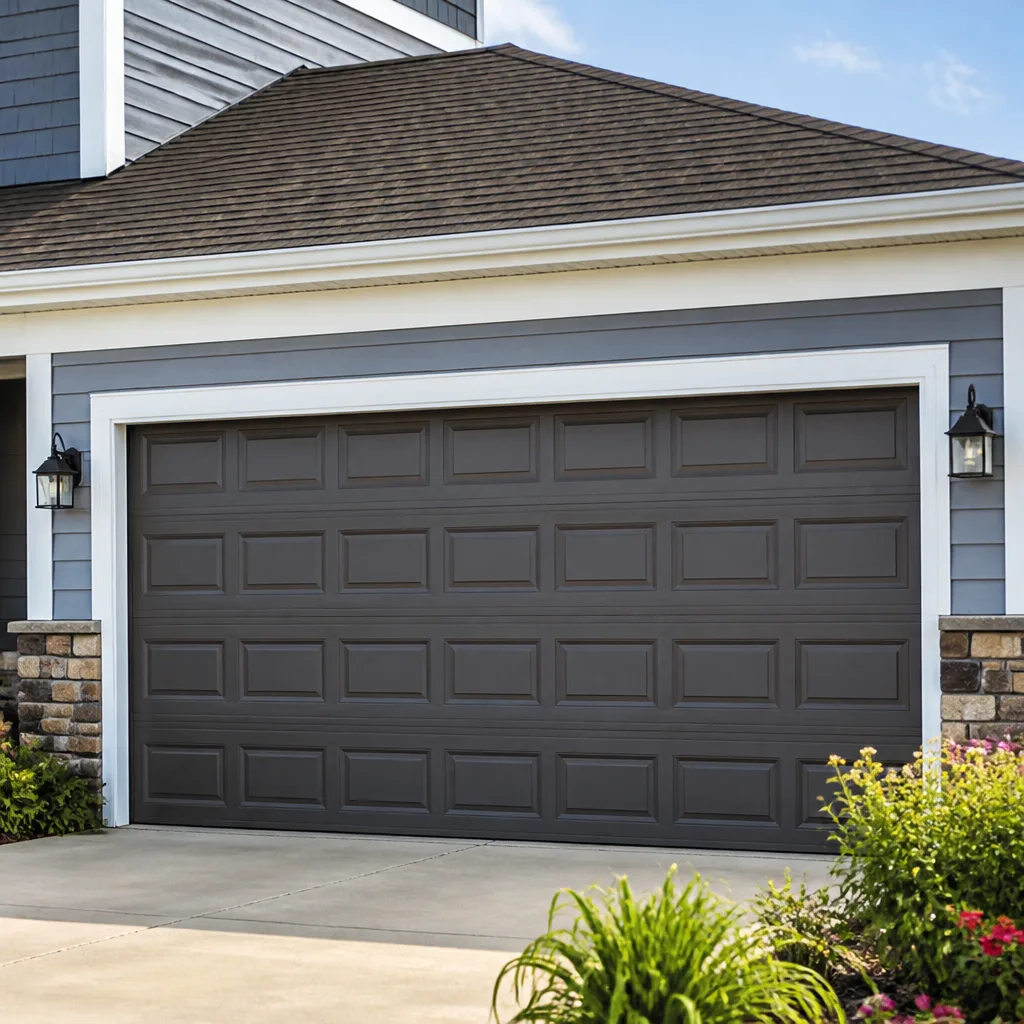 Raised-panel steel
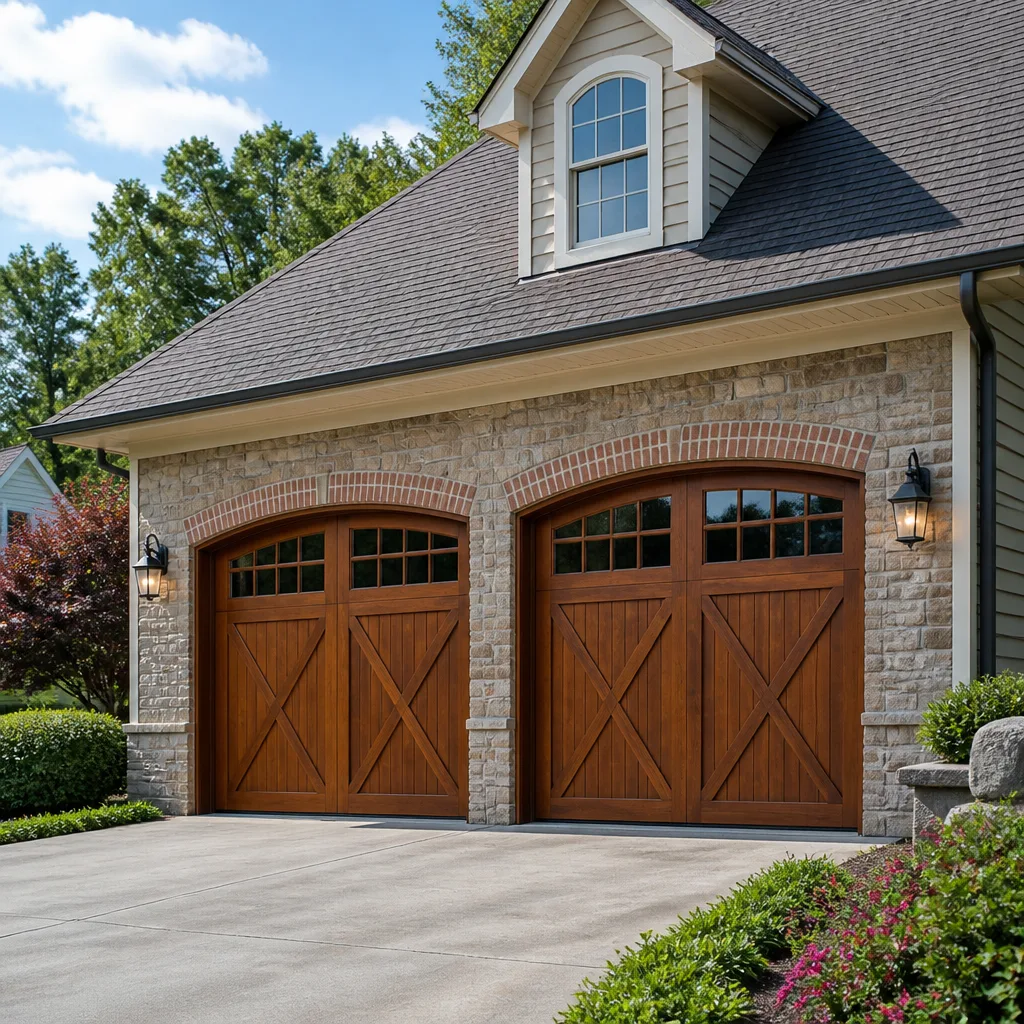 Carriage house
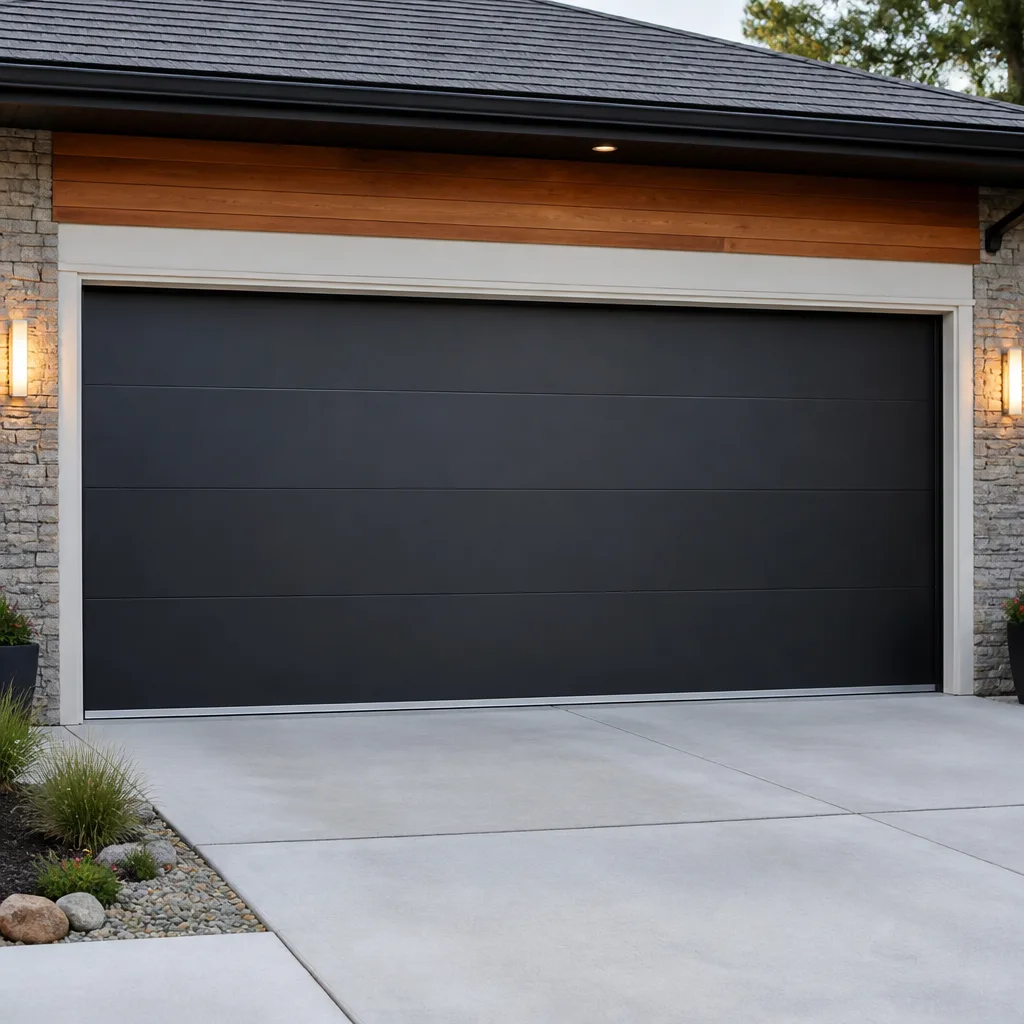 Modern flush
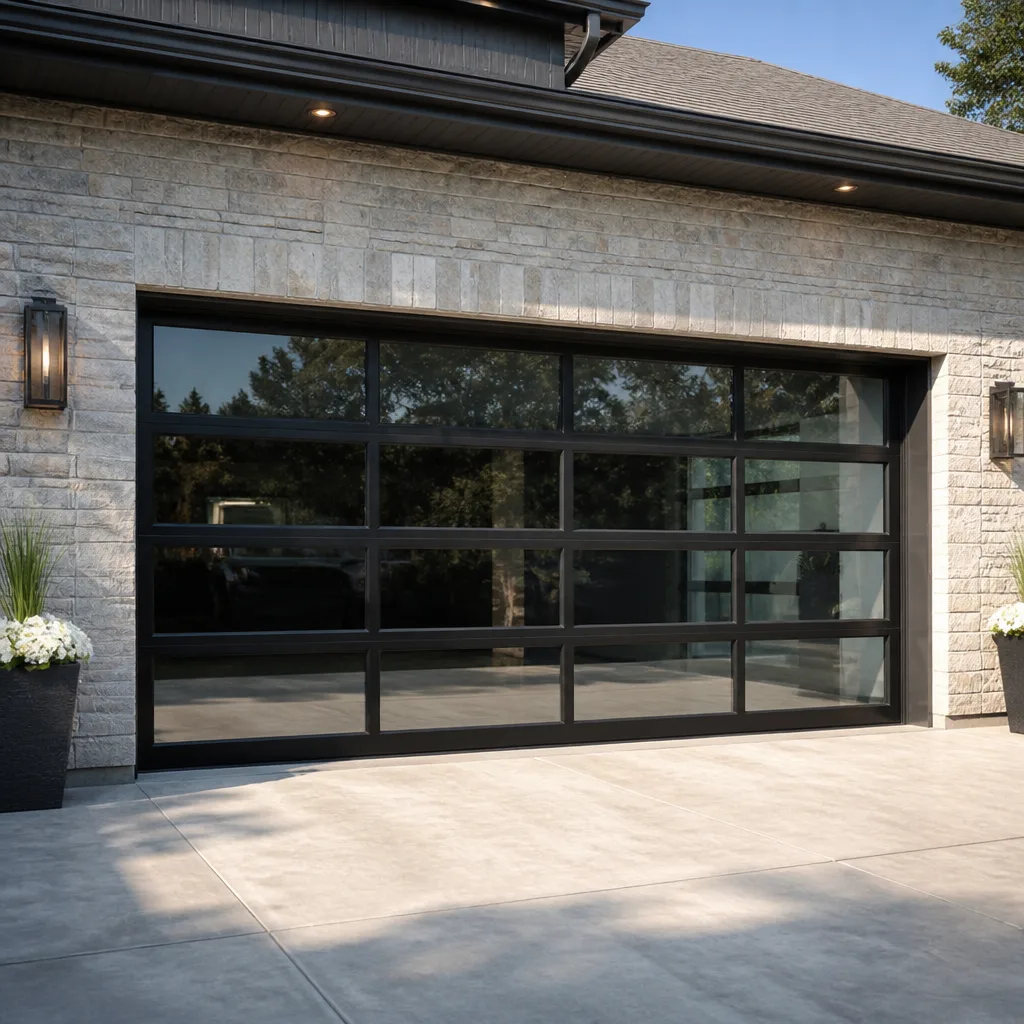 Full-view glass
 LiftMaster openers
 Chamberlain openers
Full 25-point door and opener safety check with every visit - springs, cables, rollers, tracks, and your LiftMaster or Chamberlain opener included
You get a price before we start. It does not change when the truck arrives.
Get your free estimateGarage Door Permits, Codes & Inspections in CA: What You Need to Know
Most California homeowners discover the garage door permit question at the worst possible moment: during escrow, when a buyer’s inspector flags an unpermitted installation, or after a neighbor’s complaint triggers a code enforcement letter. The rules themselves aren’t especially complicated. What catches people off guard in places like Rancho Cucamonga is how unevenly they’re enforced. One contractor pulls a permit every time. Another skips it entirely for the exact same job. Both finish the work. Only one leaves behind a problem that can cost thousands to fix later. This guide walks through the actual permit triggers, the codes that matter, what inspectors check, and how to avoid the pitfalls that typically surface years after the install. For Garage Door Warning Signs: A Rancho Cucamonga Homeowner’s Reference Guide, see our companion resource.
Quick Answer
In California, a new garage door installation on an attached garage requires a building permit in most cities, including Rancho Cucamonga. A like-for-like replacement of an existing door often does not, and an opener-only swap almost never does. The catch: many contractors skip the permit on jobs that need one, and the homeowner inherits the liability at resale.
Styles & brands we work with
Table of Contents
- Which Garage Door Jobs Actually Trigger a Permit in San Bernardino County
- California Title 24 and Your Garage Door: What the Energy Code Requires
- The Seismic Disconnect Rule: UL 325 Compliance for Automatic Openers
- What a City of Rancho Cucamonga Building Inspector Actually Checks
- HOA Architectural Approval vs. City Permits: Two Processes, Different Rules
- The Real Cost of an Unpermitted Garage Door Installation
- How the Permit Process Works, Step by Step
- Common Mistakes to Avoid
Which Garage Door Jobs Actually Trigger a Permit in San Bernardino County
San Bernardino County follows the California Residential Code, and the permit requirement for garage doors boils down to one question: are you altering the structure or replacing equipment in kind? A new door that changes the opening size, framing, or header requires a permit every time. A panel-for-panel swap of the same size door generally does not. An opener replacement by itself rarely triggers anything. Here’s the breakdown as we’ve seen it applied across Rancho Cucamonga job sites.
Jobs that typically require a permit in Rancho Cucamonga:
- New door installation where none existed before – converting a carport to a garage or adding a door to a new wall. This changes the building envelope.
- Enlarging the existing opening – going from a single to a double door, or raising the header height for a taller vehicle. Structural work is involved.
- Modifying the header or load-bearing framing around the door, even if the door itself is a drop-in replacement.
- New garage structure with a door – any attached or detached garage built from scratch includes the door in its permit scope.
Jobs that typically do not require a permit:
- Like-for-like door replacement – same width, same height, same mounting points. The old door comes out, the new one goes in.
- Garage door opener motor swap – replacing an existing opener with a new unit at the same location is considered an equipment change, not a structural one.
- Spring, cable, roller, or track repairs on a door that’s already installed. Mechanical repair work on existing equipment doesn’t trigger a building permit.
The gray zone sits between like-for-like and new installation. If you’re replacing a wood door with an insulated steel door of the same dimensions, no permit is usually needed. If you’re replacing a 16-foot door with an 18-foot door and reframing the opening, you need one. In our experience in Rancho Cucamonga, the same job can get different answers depending on which building department employee you ask, which is exactly why we recommend calling the city directly when there’s any doubt. The City of Rancho Cucamonga Building and Safety Division publishes its own permit requirements, and they sometimes add local amendments on top of state code.
One more factor: attached versus detached garages. California code treats attached garages as living-space-adjacent structures, which brings energy requirements into play on new doors. Detached garages face fewer requirements. If you’re working on a detached shop or converted outbuilding in Rancho Cucamonga, the permit threshold is often lower.
For full-service help deciding what your project needs, Bronze Garage Door Repair home guides on this topic are written by garage door specialists who have walked permits through San Bernardino County before, not generalists figuring it out on your job.
California Title 24 and Your Garage Door: What the Energy Code Requires
The California Energy Code, formally known as Title 24 Part 6, governs the energy performance of new and replacement garage doors when the garage is attached to conditioned living space. This is the rule most homeowners have never heard of, even when they’ve lived in California their whole lives. Here’s why it matters for your door.
Title 24 treats an attached garage as a buffer space. If your garage shares a wall or ceiling with your home’s conditioned area, a new door must meet specific insulation requirements. For the hottest climate zones in Southern California, including Rancho Cucamonga, the code requires a minimum R-value on insulated garage doors in most new installations and many replacements. R-value measures resistance to heat flow. Higher numbers mean better insulation. A single-layer steel door with no insulation has essentially no R-value. A polyurethane or polystyrene-insulated door from manufacturers like Clopay, Amarr, or Wayne Dalton typically carries an R-value between R-6 and R-18, depending on thickness and construction.
The practical implications for Rancho Cucamonga homeowners:
- Attached garages need insulated doors on new installations. If a contractor quotes you a non-insulated door for an attached garage, that quote won’t pass inspection in most cases.
- Replacement doors on attached garages may trigger Title 24 review even when the permit itself isn’t required. This is the confusing part: the building department might not ask for a permit, but the energy code still applies to the product specification.
- Detached garages face looser energy requirements. A standalone garage that isn’t connected to conditioned space doesn’t need the same insulation level. You can often get away with a basic steel door out there.
- Inland heat is different from coastal heat. Rancho Cucamonga regularly hits triple digits in summer. An uninsulated metal door on a west-facing garage can push interior temperatures past 120 degrees, which radiates into any adjacent rooms and taxes your air conditioner. The energy code’s insulation requirements aren’t just bureaucracy. They’re built for the San Bernardino County climate reality.
Title 24 compliance isn’t something you verify by looking at a door. It requires a product specification sheet or a compliance certificate from the manufacturer. Amarr, Clopay, and Wayne Dalton all publish Title 24 compliance documentation for their energy-rated lines. When we install new doors on attached garages in Rancho Cucamonga, we provide the insulation specs before any hardware goes up so there’s no surprise when the inspector asks for documentation.
If you’re unsure whether your project falls under Title 24, the honest answer is that it depends on your specific garage configuration and door choice. Double-check with both the manufacturer’s spec sheet and the city’s plan check before you sign a contract. Homeowners who skip this step sometimes end up with a beautiful new door that can’t pass a final inspection because the energy numbers weren’t right.
The Seismic Disconnect Rule: UL 325 Compliance for Automatic Openers
California has a garage door opener requirement that most states don’t: every automatic opener installed after 1991 must have a seismic disconnect mechanism, and it must meet the UL 325 standard for entrapment protection. If you’ve ever wondered why your California garage door opener has that extra handle or release cable, this is it. It’s not a convenience feature. It’s code.
UL 325 is the federal standard governing automatic garage door opener safety. Among its requirements: automatic reverse mechanisms that stop and reverse the door when an obstruction is detected, and a manual release that works from outside the garage. In California, the seismic disconnect must physically separate the door from the opener track so the door can be manually operated after an earthquake. The thinking is simple: if a quake knocks out power or shifts the structure, you still need to get your car out or your family through the garage.
How to verify your opener meets the standard:
- Look for the UL 325 listing mark on the opener’s motor housing or the product label. Every modern opener from LiftMaster, Chamberlain, Genie, or Craftsman carries this mark. If yours doesn’t, it’s either extremely old or shouldn’t be installed.
- Test the auto-reverse. Place a solid object like a 2×4 on the floor under the door and close it. The door should reverse within two seconds of contact. If it doesn’t, the opener is out of compliance and needs immediate service.
- Test the manual release. Pull the red release handle while the door is closed. You should be able to lift the door manually without force. If it’s stuck or the spring is broken, you have a bigger problem than code compliance.
- Check the photo-eye sensors at the bottom of the door track on both sides. They should be wired, unobstructed, and functional. A door that closes when you block the beam means the entrapment protection has failed.
In Rancho Cucamonga, proximity to the San Andreas and San Jacinto fault systems means the seismic disconnect isn’t a theoretical feature. It’s the thing that lets you reopen your garage after a major event without waiting for utility restoration or a technician. We regularly see older openers in Rancho Cucamonga garages that pre-date these requirements. Some of them still work fine mechanically, but they fail current code and can’t be legally reinstalled if they’re removed for service. If your opener predates the mid-1990s, it’s time to plan a replacement rather than patch it until it dies.
This is exactly the kind of code knowledge that comes from working on opener systems specifically. Garage Door Opener Repair in Rancho Cucamonga covers everything from modern smartphone-compatible LiftMaster and Chamberlain units to the older Craftsman systems still found in many homes across the Inland Empire.
What a City of Rancho Cucamonga Building Inspector Actually Checks
When a City of Rancho Cucamonga building inspector arrives at a permitted garage door installation, they’re looking at a specific checklist, not the overall quality of your contractor’s craftsmanship. Understanding what’s on that checklist is the difference between passing first time and failing on a technicality. Here’s what happens.
The inspection typically runs 15 to 30 minutes. The inspector will verify the permit is posted and accessible, then work through the following items:
- Opening dimensions match the approved plans. If the permit specifies a 16×7 door and the contractor installed a 16×8, that’s an immediate fail until the plans are amended.
- Header and framing meet code. The inspector checks the size and span of the header beam above the door, the king studs and jack studs on either side, and the fastening schedule. This is structural verification, not aesthetic.
- UL 325 compliance on the opener. Auto-reverse function, photo-eye sensors, and the manual release all get tested on site.
- Title 24 insulation documentation for attached garage doors. The inspector will want to see the manufacturer’s R-value spec sheet or a copy of the compliance certificate.
- Wind load compliance. Southern California doors need to resist specific wind pressures. The inspector verifies the door rating against the local wind speed zone.
- Fire separation requirements. In attached garages, the wall between garage and living space has fire rating requirements. The inspector may check that the door area doesn’t compromise that separation.
The most common reasons we’ve seen inspections fail in Rancho Cucamonga: missing Title 24 documentation, photo-eye sensors installed too high off the floor (they should be within 6 inches), and improper header support on oversized openings. None of these are catastrophic, but each one means a reinspection fee and a delay.
One thing that surprises homeowners: the inspector won’t adjust the door, balance the springs, or evaluate how smoothly the door runs unless it’s a safety issue. Mechanical quality is between you and your installer. The inspection confirms code compliance, not craftsmanship. That’s why it matters who you hire. A door can pass inspection and still be poorly installed in ways that surface six months later.
When you work with a garage-door-only specialist like Garage Door Installation in Rancho Cucamonga, you’re getting a team that has walked this exact inspection checklist dozens of times and knows what the Rancho Cucamonga inspectors focus on. That familiarity means fewer surprises at final inspection.
HOA Architectural Approval vs. City Permits: Two Processes, Different Rules
If you live in an HOA-governed community in Rancho Cucamonga, you have two separate approval processes for any garage door work: the city’s building permit process and your HOA’s architectural review. They don’t talk to each other. They have different requirements. And satisfying one doesn’t satisfy the other.
The HOA architectural committee cares about aesthetics: door color, panel style, window and decorative element choices, and sometimes brand preferences. Their CC&Rs often specify approved colors and styles, and they have the power to fine you or require replacement if you install a door they didn’t approve. This applies even when the city doesn’t require a permit. You can legally install a like-for-like replacement door without a city permit in Rancho Cucamonga and still be in violation of your HOA rules if you chose an unapproved door.
The city cares about safety and code compliance: structural integrity, energy performance, UL 325 adherence, wind load ratings. The city will never ask you whether your door matches the community’s color palette. The HOA will never ask whether your header beam meets span requirements. They’re entirely separate standards.
Here’s the conflict we see most often in Rancho Cucamonga HOA communities: the HOA architectural committee wants a specific aesthetic style that makes the home look consistent, but that style might not be available from a manufacturer that meets Title 24 insulation requirements for attached garages. Now the homeowner is caught between two mandates. The typical resolution involves going through the HOA’s variance process or finding a door that splits the difference. Amarr and Clopay both produce doors with traditional carriage-house styling that carry solid insulation ratings, which addresses the aesthetic-vs-energy conflict in most cases.
Practical advice if you’re in an HOA community:
- Read your CC&Rs before you shop for a door. Not after. The restrictions are probably more specific than you expect.
- Submit the HOA architectural request and the city permit application at the same time. HOA review can take 30 to 60 days in some Rancho Cucamonga communities. The city permit usually processes faster. Starting both early avoids a situation where one expires while you wait for the other.
- Get approved colors and styles in writing from the HOA before you place a non-refundable order for a custom door.
- Don’t assume the contractor knows your HOA rules. A contractor can pull all the right permits and still install a door that violates your CC&Rs. That’s your problem, not theirs.
For Garage Door Repair in Rancho Cucamonga, we’ve worked in dozens of HOA communities across the city and can tell you which door manufacturers consistently meet both the aesthetic demands of architectural committees and the code requirements of the building department. It’s the kind of local knowledge that saves a project from a frustrating dead end.
The Real Cost of an Unpermitted Garage Door Installation
If you sell your Rancho Cucamonga home and an unpermitted garage door installation shows up on a title search or inspection report, you’re the one who pays to retrofit – not the contractor who skipped the filing. This is the opening hook of this guide because it’s the scenario most homeowners don’t see coming.
The sequence usually works like this: a contractor gives you a price that’s $300 to $500 cheaper because they’re not pulling a permit. The work gets done. It looks fine. Years pass. You list the house. The buyer’s inspector notices a newer door and asks to see the permit. You don’t have one. Now you’re dealing with one of several outcomes:
- Retroactive permit – you apply for a permit after the fact. The city charges a permit fee plus a penalty, typically double the standard fee. An inspector comes out, and if the installation doesn’t meet current code, you’re paying to fix it before you can close escrow.
- Escrow credit – the buyer demands a credit to cover the cost of bringing the door up to code. You’re negotiating that credit under time pressure, which is never a strong position.
- Deal cancellation – if the buyer is skittish, an unpermitted installation can be the issue that kills the transaction entirely.
- Insurance complications – if the door is later involved in a property damage or liability claim, the insurance company may investigate whether the installation was permitted. An unpermitted door can give them grounds to deny coverage.
The ironic part is that the cost of the permit itself is small. In Rancho Cucamonga, a typical garage door permit runs in the low hundreds of dollars depending on the project valuation. The cost of not having it can run into the thousands when you’re under escrow pressure and a buyer has leverage. The contractor who skipped the permit saved themselves some paperwork. The homeowner bears the full financial weight of that shortcut later.
We’re not trying to be alarmists. But we’ve seen enough Rancho Cucamonga escrow hold-ups to know that the permit question isn’t a formality. It’s a future liability. Our advice: if a contractor tells you a permit is unnecessary for a job that sounds structural, check with the city yourself before you proceed. The building department’s phone service is surprisingly helpful, and the question takes five minutes to answer.
How the Permit Process Works, Step by Step
For the jobs that do require a permit in Rancho Cucamonga, the process is more straightforward than most homeowners expect. Here’s a realistic walk-through of what actually happens, based on current City of Rancho Cucamonga procedures.
- Determine if you need a permit. Call the Building and Safety Division or check their online portal. Describe the job honestly. If they say it needs a permit, it needs one. Don’t shop for a different answer.
- Prepare the permit application with project details: door dimensions, opening size, structural changes if any, and the manufacturer and model you’re installing.
- Submit plans if required. Most garage door permits are considered simple scope, but anything involving header changes or reframing will require a plan review. Your contractor or a draftsman can handle this.
- Pay the permit fee. The city calculates fees based on project valuation. Expect a few hundred dollars for a typical new installation permit.
- Schedule the installation. Once the permit is issued, work can proceed. The permit needs to be posted on the job site during work.
- Schedule the inspection. After the door is installed and the opener is wired, call for the final inspection. The inspector will work through the checklist described earlier in this guide.
- Pass the inspection and keep the paperwork. The signed-off permit is your proof of compliance. Keep it with your home records. You’ll want it when you sell.
The whole process for a straightforward new door installation typically runs one to three weeks from application to final inspection in Rancho Cucamonga. The inspection itself is quick. The waiting time for plan review, if required, is the variable.
Manufacturer choice matters here in a way homeowners don’t always anticipate. Doors from Clopay, Amarr, and Wayne Dalton all ship with the documentation needed for Title 24 and wind load verification. A no-name import might be cheaper upfront but can create documentation gaps that stall inspection. We carry these three brands specifically because their spec sheets are consistently accepted by San Bernardino County and City of Rancho Cucamonga plan checkers. Craftsman openers, despite the brand’s reputation as a homeowner-grade product, also carry solid UL 325 documentation that passes without friction.
When we handle a permitted installation, the permit coordination is part of the job. You get a door installed, inspected, and documented. That’s the full scope. It’s how a garage door specialist should operate.
Common Mistakes to Avoid
- Assuming every contractor pulls permits. Some do. Some quietly skip them to keep prices low. You don’t discover which one you hired until something goes wrong. Ask directly before you sign: “Will you pull the permit?” If they hem and haw, find someone else.
- Treating like-for-like replacement as a blanket exemption. In most cases you’re fine, but changes to the opening, the framing, or the garage type can flip a simple swap into a permit-required job. Know your specific situation rather than relying on a rule of thumb you read online.
- Ignoring Title 24 on appended garages. The energy code applies to the door you’re installing, not just the house you’re renovating. An uninsulated door on an attached garage in Rancho Cucamonga violates code even when the city hasn’t asked for a permit.
- Skipping the HOA review because the city didn’t require a permit. City and HOA are separate tracks. A code-compliant door can still be an HOA violation subject to fines and forced replacement.
- Accepting a lowball bid without asking what’s excluded. If one bid is $600 cheaper than the others and the difference is a permit fee plus Title 24 documentation, you’re not saving money. You’re borrowing a problem at interest.
- Leaving the manual release handle off or the photo eyes disconnected. These are safety devices required by UL 325. Bypassing them might make the door work more reliably in the short term. It also creates a code violation and a genuine safety hazard.
- Not keeping your final inspection records. The signed permit is the only proof you have that the door was legally installed. Lost paperwork equals re-permitting at resale. Store it with your mortgage documents.
See the difference
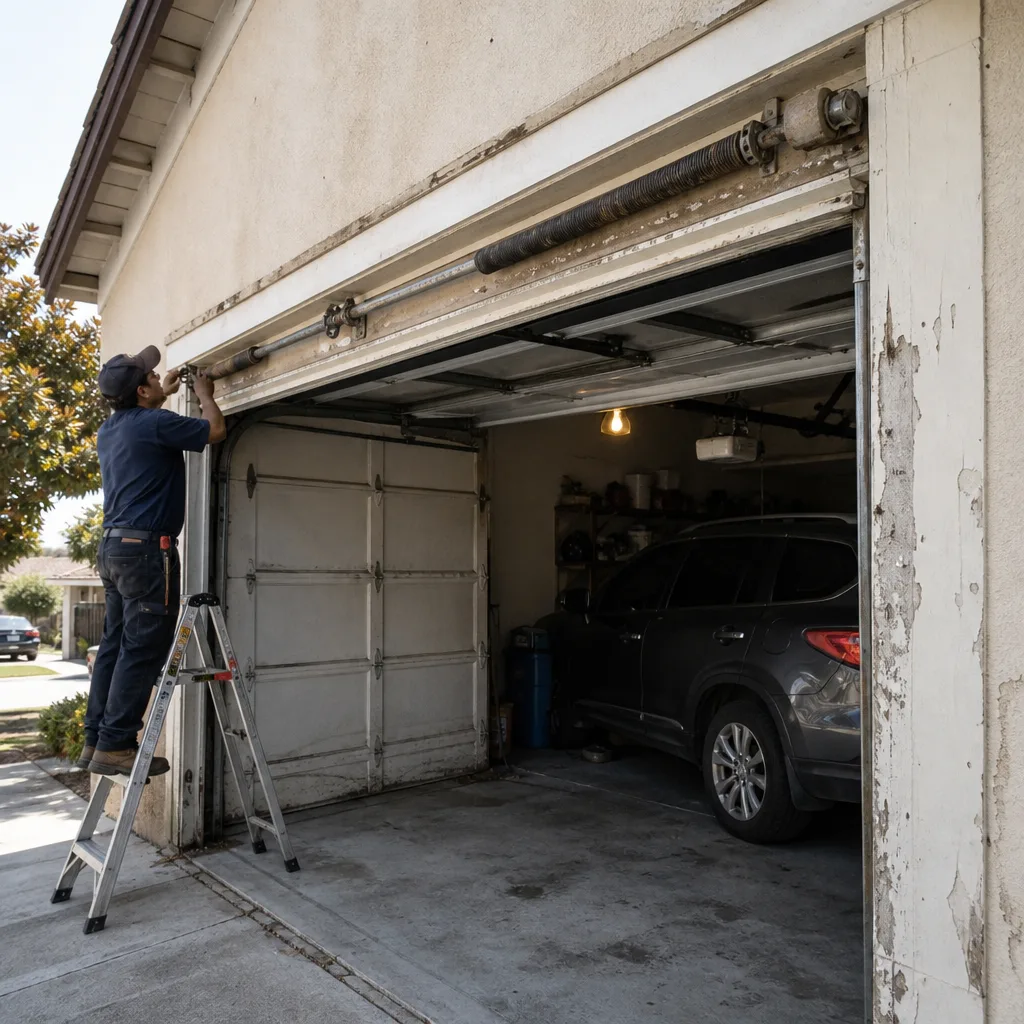 Before
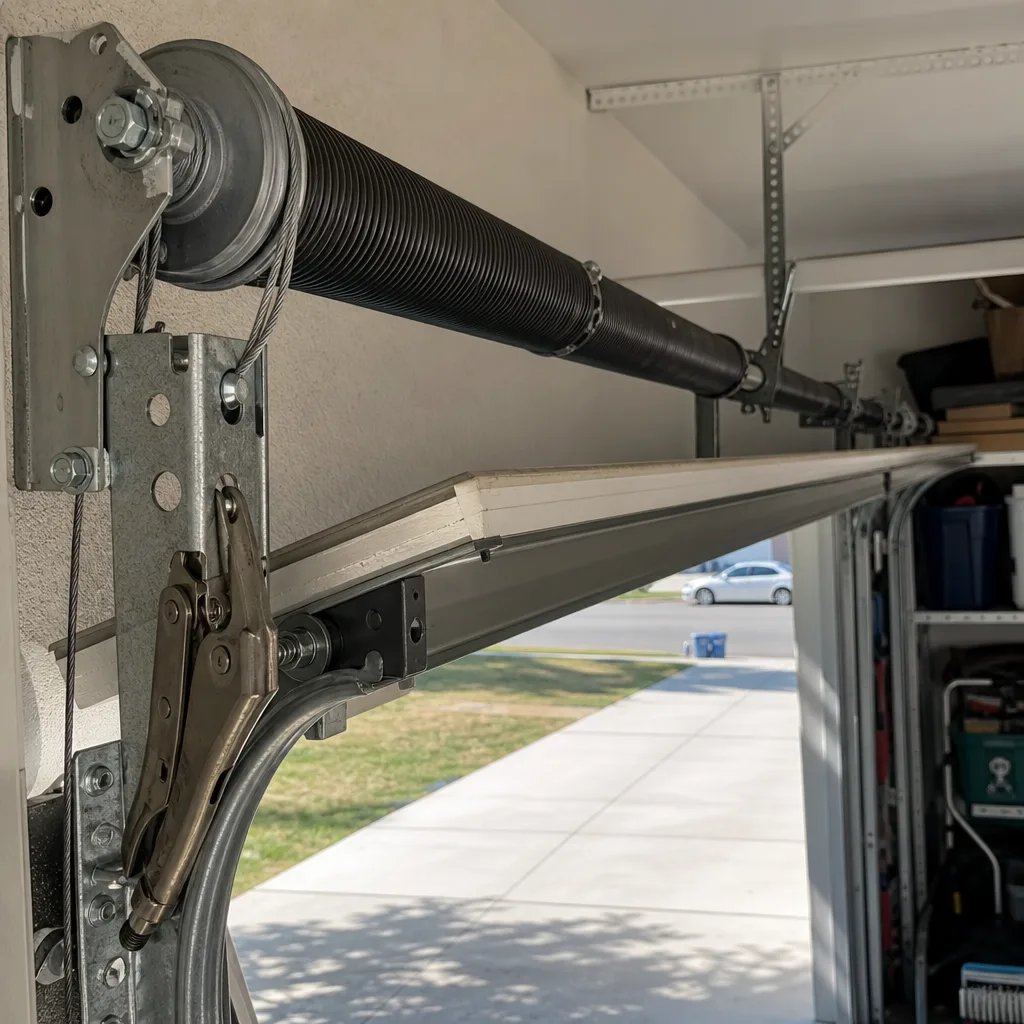 After
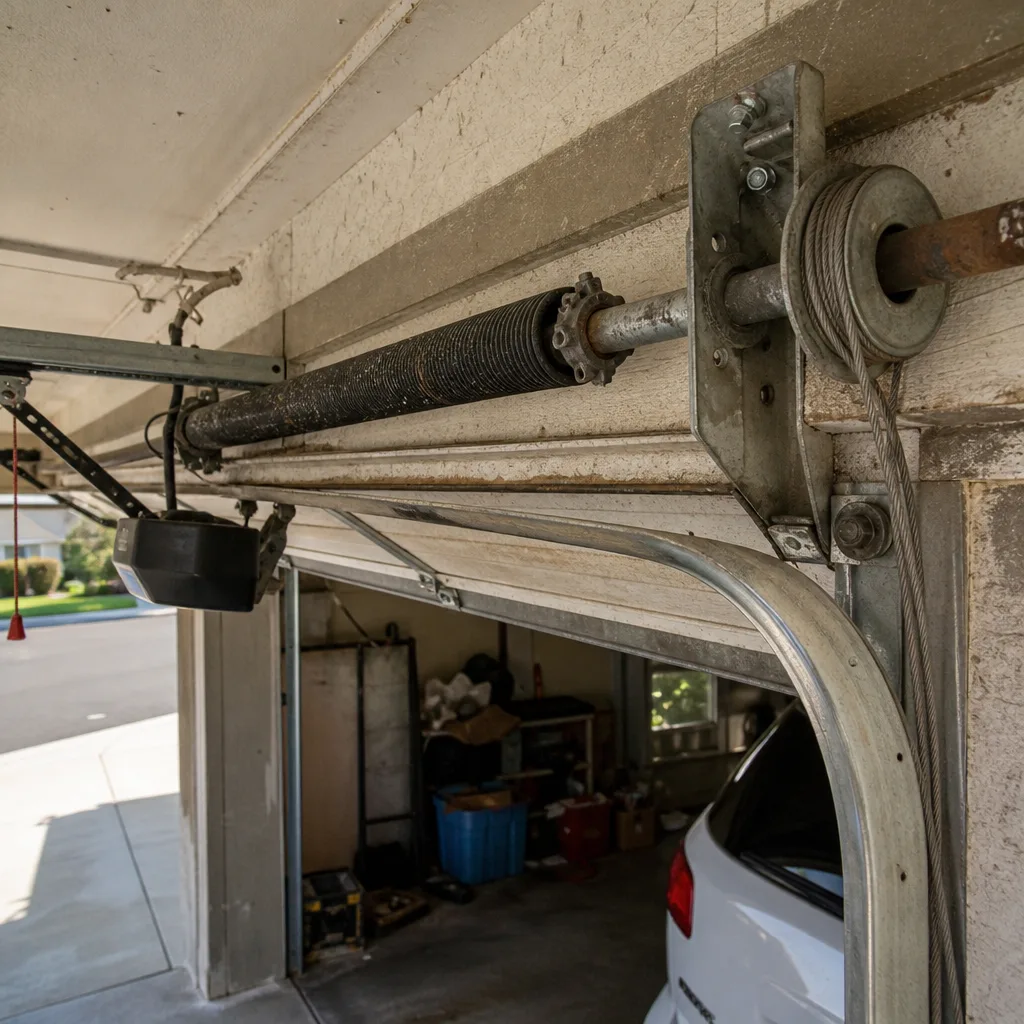 Before
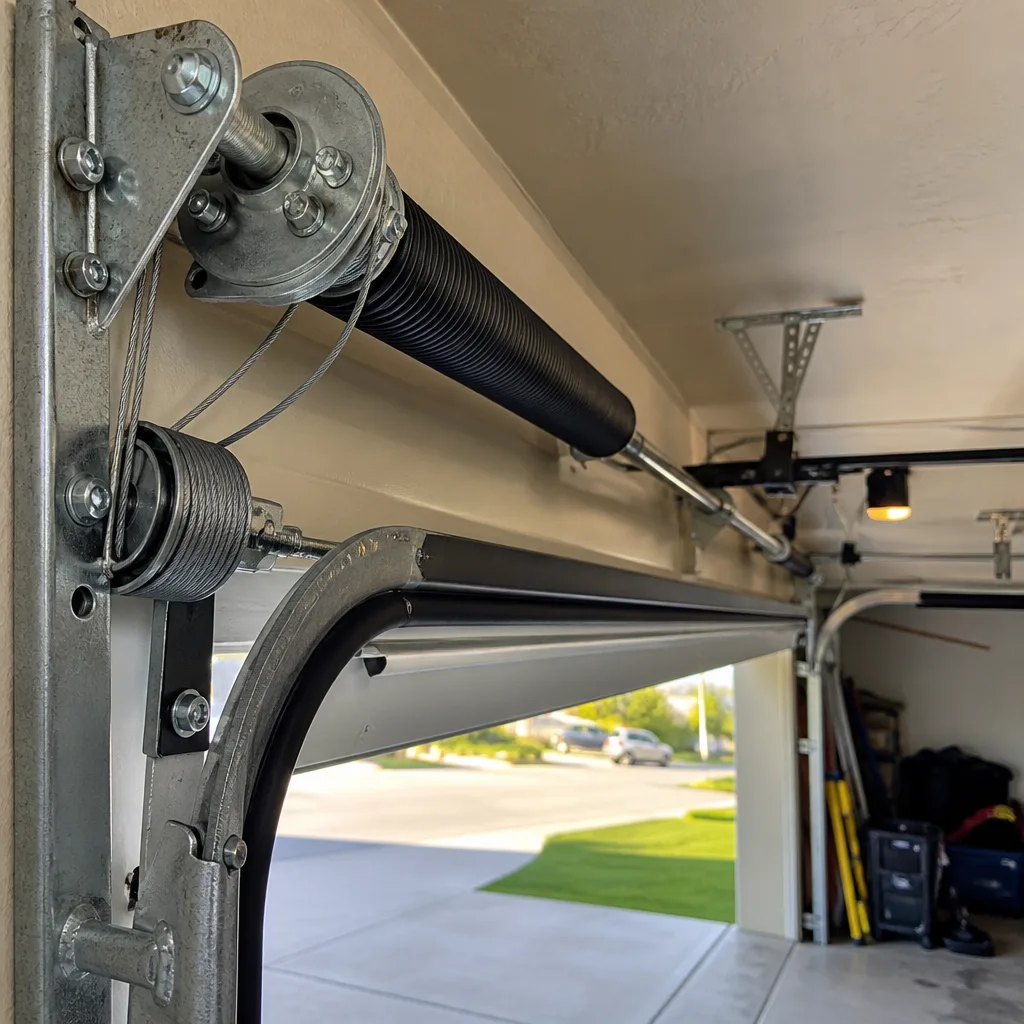 After
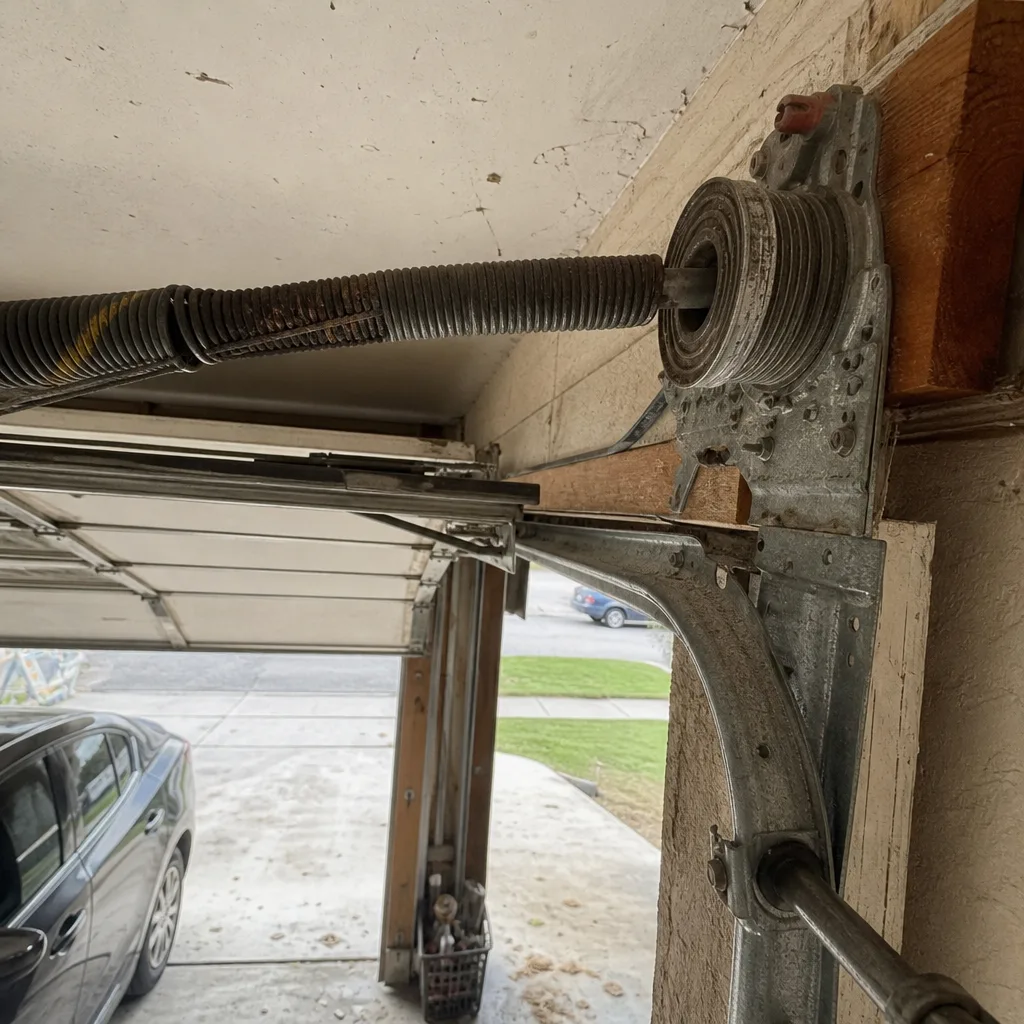 Before
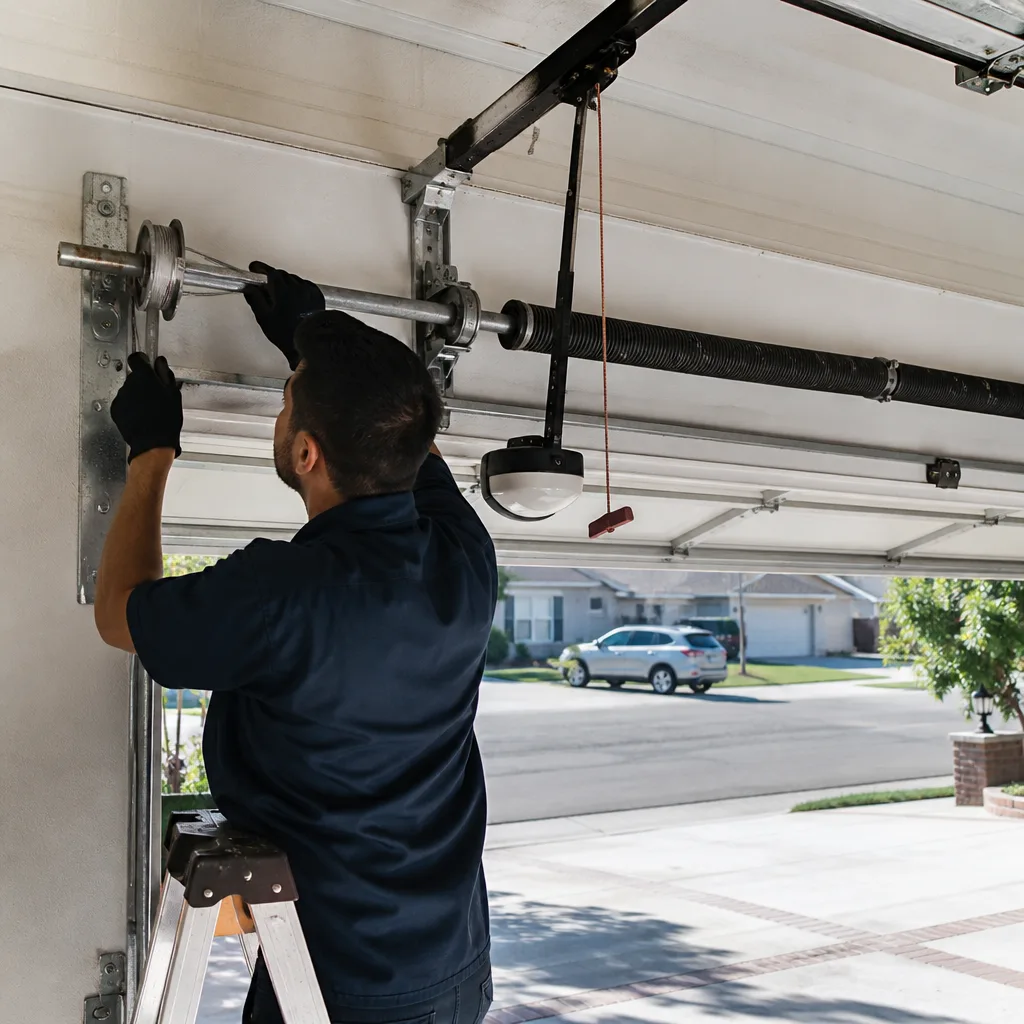 After
When to Call a Professional
Some garage door projects are weekend DIY jobs. Others cross into territory where a mistake becomes a structural, code, or safety problem. Call a specialist when your job involves opening changes, header modifications, new installation on an attached garage, or any opener replacement where UL 325 compliance needs to be verified. Call one when your project sits in the permit gray zone and you want a definitive answer instead of a guess. Call one when you’re in an HOA community and need a door that satisfies both the architectural committee and the building department. Call one when an old door fails and you don’t want to compound the problem with a non-permitted replacement. Bronze Garage Door Repair offers free estimates in Rancho Cucamonga – call (833) 734-6940 and we’ll tell you exactly what your specific project requires.
Frequently Asked Questions
You typically do not need a permit for a like-for-like replacement of an existing door with the same dimensions and mounting points, but you do need one for new installations, opening enlargements, or any structural modifications. The exception is that even a like-for-like replacement on an attached garage should comply with Title 24 insulation requirements. Call (833) 734-6940 to get a definitive answer for your specific Rancho Cucamonga home.
Permit fees in Rancho Cucamonga are calculated on project valuation, and most garage door installation permits land in the low hundreds of dollars depending on the project’s declared value. Plan review fees, if required, are separate. Call (833) 734-6940 for a free estimate that includes the full cost of a permitted installation, not just the door itself.
Yes, replacing an existing opener with a new one at the same location is considered equipment replacement and doesn’t require a building permit in most California jurisdictions, including Rancho Cucamonga. However, the new opener must meet UL 325 safety standards, including auto-reverse and photo-eye entrapment protection. If you’re unsure whether your installation meets code, call (833) 734-6940 for a free consultation.
Title 24 is the California Energy Code, which sets insulation requirements for garage doors on attached garages to reduce heat transfer from the garage into conditioned living space. New door installations on attached garages in Rancho Cucamonga must meet specific R-value minimums, and you’ll need the manufacturer’s insulation documentation at inspection. Call (833) 734-6940 if you need help understanding whether the door you’re considering complies.
If you live in an HOA-governed community, you likely need architectural committee approval for any visible door change regardless of whether the city requires a permit. HOA rules govern aesthetics like color and style, and they’re enforced separately from city code. Violating CC&Rs can result in fines or forced replacement. Call (833) 734-6940 if you need help navigating both approval processes.
Yes, most California cities including Rancho Cucamonga allow retroactive permits for work that was done without one, though you’ll pay the standard permit fee plus a penalty, typically double the original fee. An inspector will verify the installed work meets current code, which may require corrections at your cost. If you’ve inherited an unpermitted door, call (833) 734-6940 for a free assessment of what it will take to legalize it.
The Bottom Line
California garage door permit requirements aren’t complicated, but they’re unevenly enforced, and the homeowner always carries the risk of non-compliance. New installations and structural changes need permits. Like-for-like replacements usually don’t. Energy code applies to attached garages. UL 325 safety compliance applies to every opener. HOA approval is separate from city permits. The smart approach is to ask directly, document everything, and hire a garage-door-only specialist who handles this process as a routine part of the job. Explore more guides & resources from our team to keep your garage door compliant and safe. A permitted installation might cost slightly more today. It costs dramatically less than retrofitting under escrow pressure later.
Written by the team at Bronze Garage Door Repair, serving Rancho Cucamonga since 2014.