

Last updated October 31, 2026
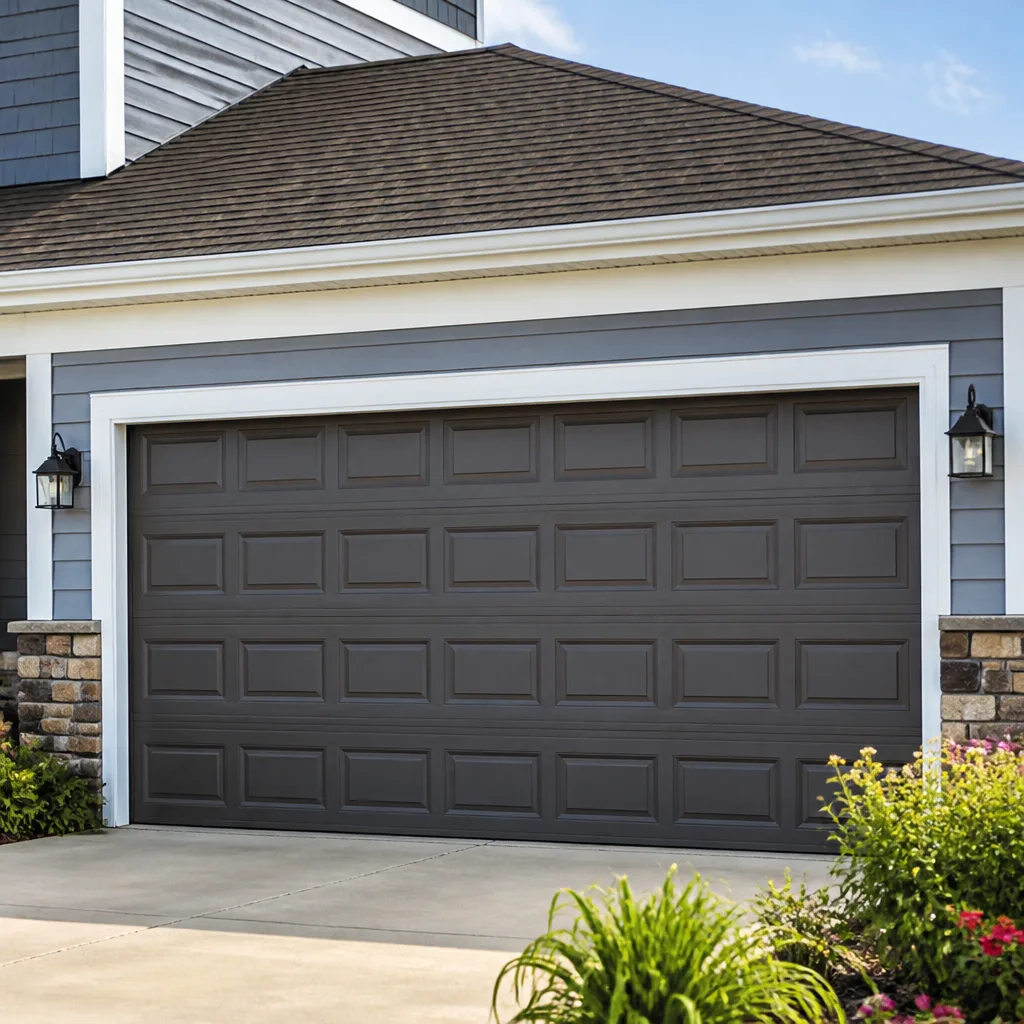 Raised-panel steel
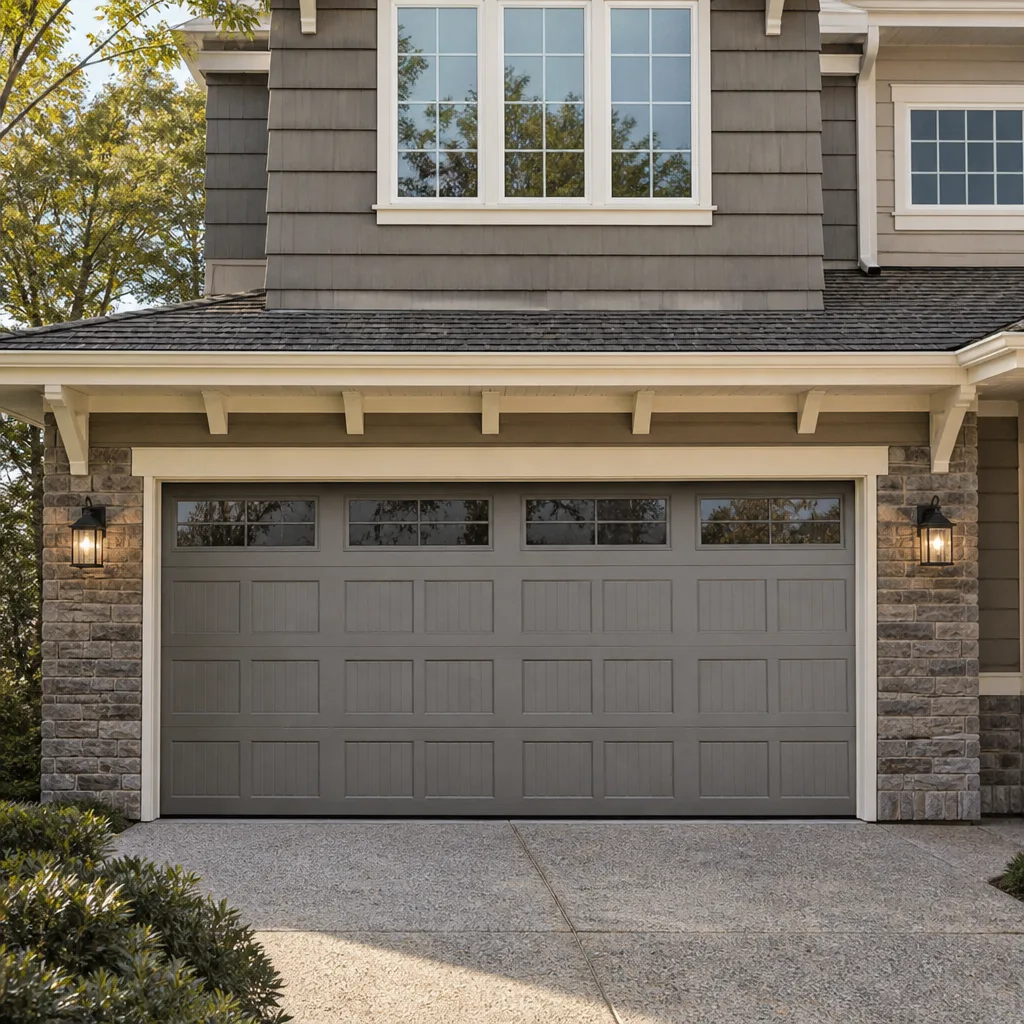
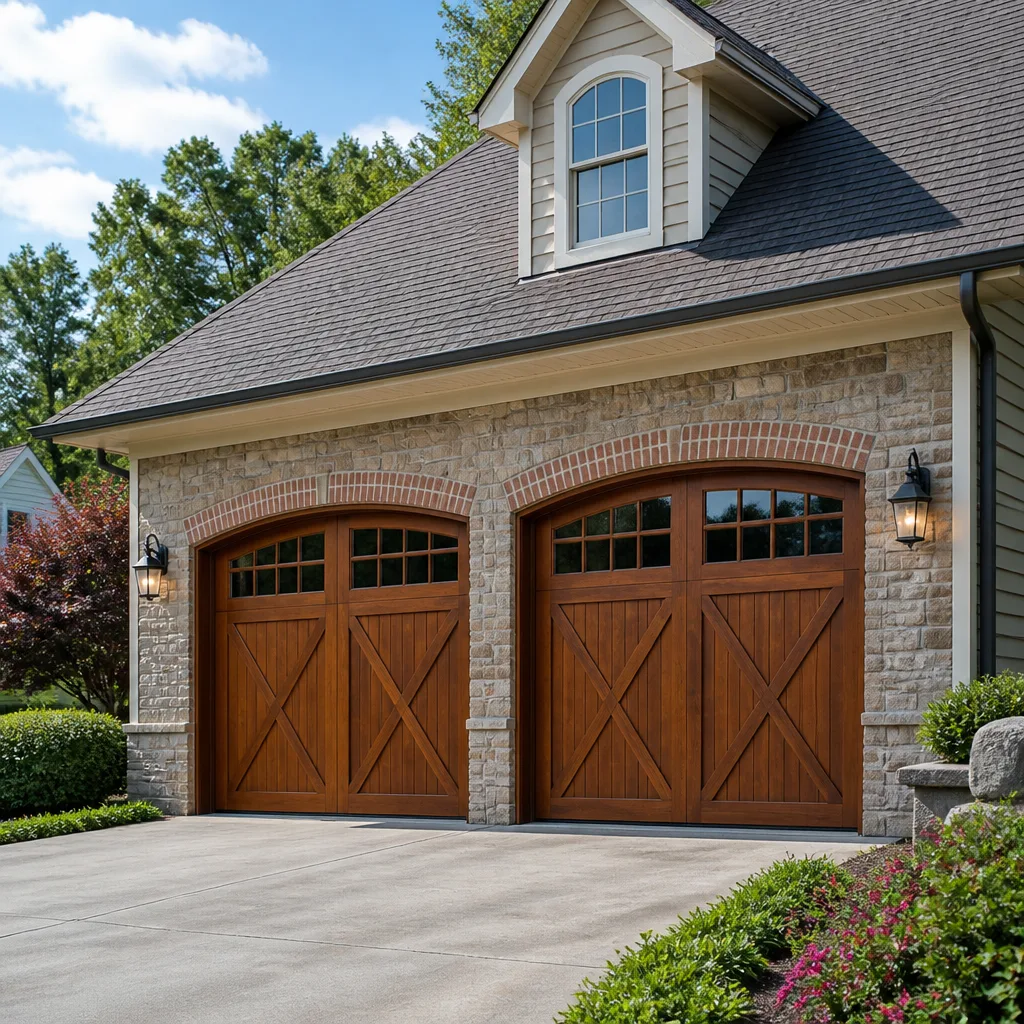 Carriage house
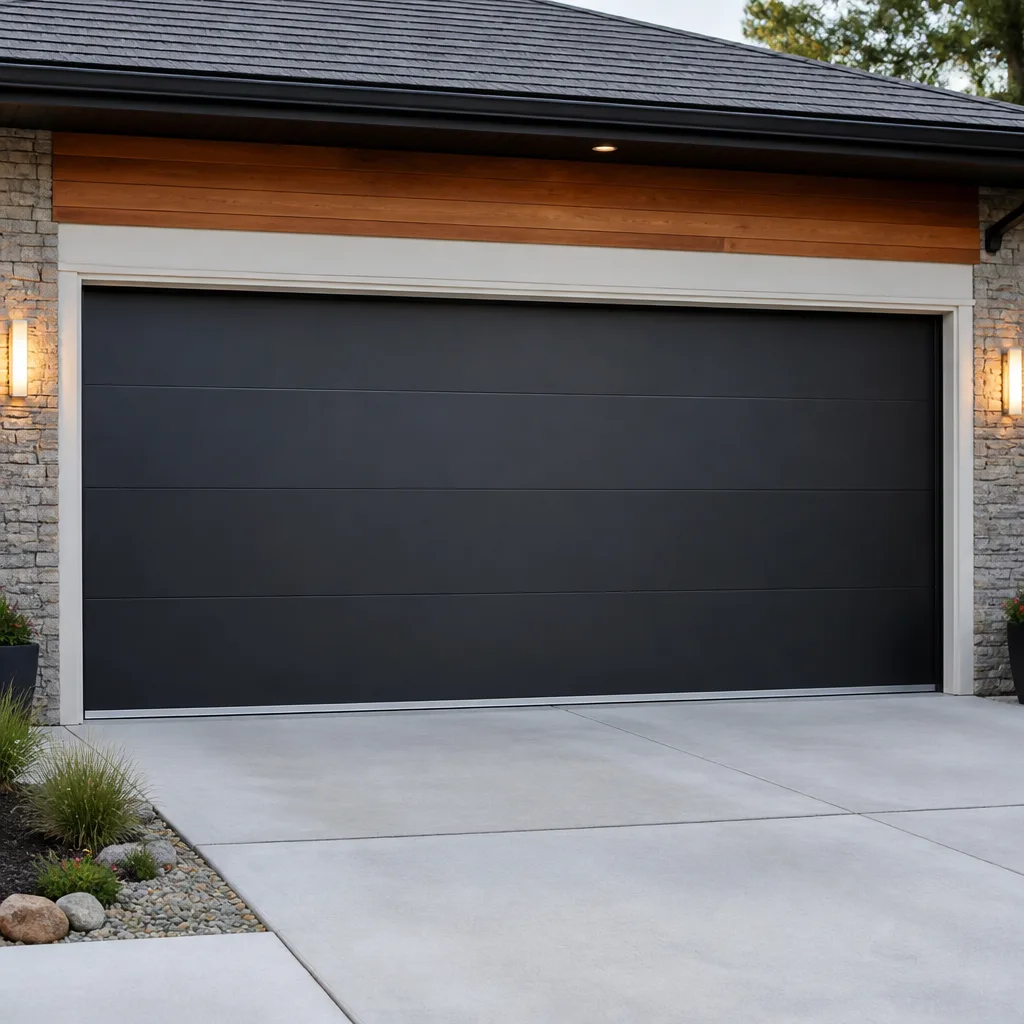 Modern flush
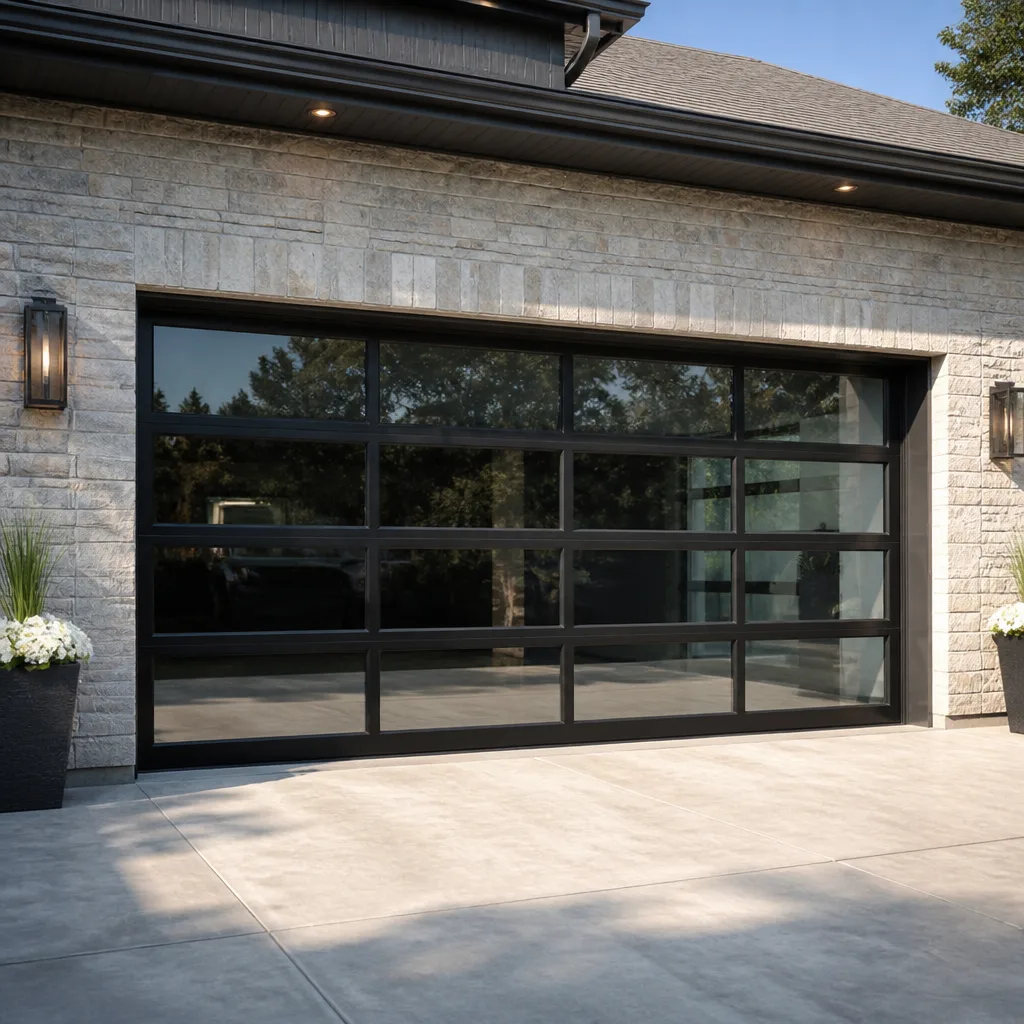 Full-view glass
 LiftMaster openers
 Chamberlain openers
Full 25-point door and opener safety check with every visit - springs, cables, rollers, tracks, and your LiftMaster or Chamberlain opener included
You get a price before we start. It does not change when the truck arrives.
Get your free estimateSeasonal Garage Door Care for Rancho Cucamonga: Year-Round Homeowner’s Guide
Most seasonal garage door guides read like they were written for Minnesota. Frost heave, ice dam melt, sub-zero grease viscosity. None of that applies in Rancho Cucamonga, where the real enemy is a July afternoon that hits 105°F and quietly cooks torsion spring grease into a gummy, friction-causing residue that most homeowners never know exists until a spring snaps in October. This guide covers the four actual seasons we deal with in the Inland Empire: the UV/heat cycle, the Santa Ana wind cycle, the brief wet period, and the spring reset. For more on local garage door care, see The Complete Guide to Garage Door in Rancho Cucamonga. If you want your door to open smoothly every single day for the next decade, here’s what actually matters, and when to do it.
Styles & brands we work with
Quick Answer
Seasonal garage door care in Rancho Cucamonga means adjusting your maintenance routine to three distinct patterns: extreme dry heat from May through September, high-wind Santa Ana events from October through December, and a short but real rain window in January and February. The highest-impact tasks are re-lubricating torsion springs with a non-volatile grease in late spring, checking panel gaps and weatherseal compression before peak heat, and doing a full hardware retorque after the first strong Santa Ana event each fall. Most of this takes under an hour per season.
Table of Contents
- Why Rancho Cucamonga’s Climate Breaks Garage Doors Differently
- Summer Prep (May): The Heat Cycle
- Santa Ana Season (October-December): Wind Load
- Winter Rain Period (January-February): Rust and Weatherseal
- Spring Reset (March): Post-Santa-Ana Retorque
- UV Damage Timeline: Polystyrene vs. Polyurethane Panels
- A Seasonal Maintenance Schedule You Can Follow
- Common Mistakes to Avoid
- When to Call a Professional
- Frequently Asked Questions
- The Bottom Line
Why Rancho Cucamonga’s Climate Breaks Garage Doors Differently
Rancho Cucamonga sits at the base of the San Gabriel Mountains, which means two things that flatland cities don’t deal with. First, we get inversion-layer heat that sits in the valley and doesn’t clear out at night the way it does in coastal cities. Second, we get Santa Ana winds that accelerate through the Cajon Pass and hit the northern neighborhoods of Rancho Cucamonga harder than almost anywhere else in the Inland Empire. The wind isn’t just strong; it’s dry, and it creates a dust-abrasion cycle that eats weatherseal rubber and dry-fouls track grease faster than any other season.
What this means for a garage door: the failure patterns we see in Rancho Cucamonga don’t match national averages. In our experience, torsion springs in this city fail more often from grease breakdown than from metal fatigue. Track hardware loosens from wind vibration, not from years of bumping. Weatherseal fails from UV sintering and dust abrasion, not from ice cycles. Homeowners who understand these local patterns spend less money over the life of a door because they fix the cause, not the symptom. Our The Complete Garage Door Repair Guide for Rancho Cucamonga Homeowners breaks down how to diagnose and fix each issue.
Here’s the predictable sequence: summer heat breaks down grease and causes panels to expand, Santa Ana winds exploit every loose bolt and compressed seal, winter rain finds the gaps created by both, and spring is when you clean up the damage and reset for another cycle. Get ahead of that sequence and the door never gets far enough gone to require emergency work.
Summer Prep (May): The Heat Cycle
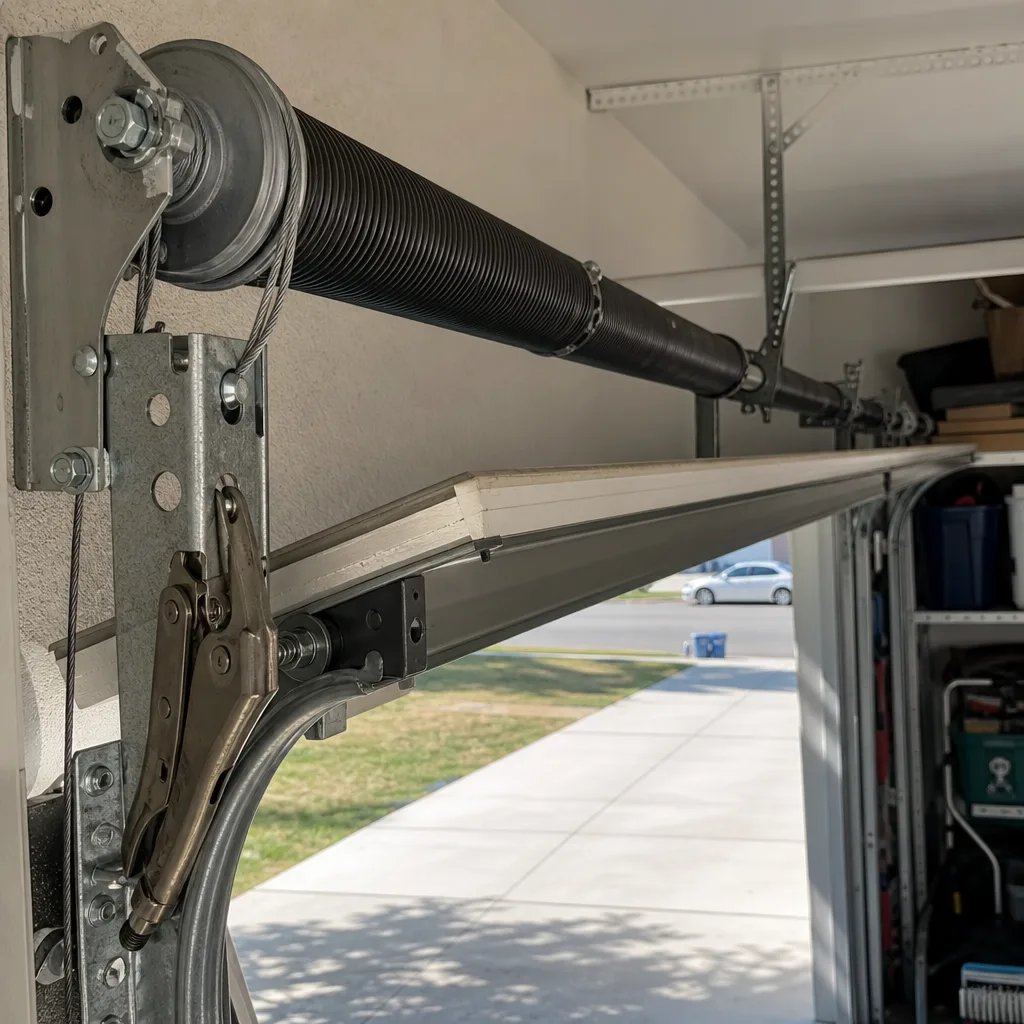
The critical seasonal task in Rancho Cucamonga that national guides miss entirely is grease volatilization. Standard garage door lubricants used in most parts of the country break down when a torsion spring sits at 140°F-plus surface temperature day after day. The volatile components evaporate and the grease left behind is thick, sticky, and abrasive. A torsion spring coated in degraded grease doesn’t rotate smoothly on its cone bolt, and that added friction is precisely what causes premature spring failure.
Do this in May, before the first real heat wave hits:
- Clean the torsion spring surface with a dry rag. Remove old grease, dust, and any crusted residue from the previous season. A spring that looks dirty is telling you it needs attention.
- Re-lubricate with a non-volatile, high-temperature grease. Not WD-40, not spray lithium, not penetrating oil. Use a silicone-based garage door grease specifically rated for sustained high heat. This is the single most important seasonal task we recommend in Rancho Cucamonga.
- Check panel alignment gaps. Steel door panels expand measurably in 100°F-plus heat. A panel gap that’s invisible at 70°F can become a noticeable light line or air leak at 105°F. Look for daylight between any two panels with the door closed. If gaps exist, the door needs a panel hinge adjustment before the heat makes it worse.
- Inspect the dark-panel problem. Dark-colored steel doors in direct southern or western sun exposure absorb significantly more thermal energy. Clopay and Amarr both make dark-panel doors that are popular in Rancho Cucamonga, but they demand closer gap monitoring because the expansion coefficient on dark steel in direct Inland Empire sun is real and measurable. A dark door on a west-facing garage in neighborhoods like Etiwanda or Terra Vista needs twice-yearly expansion checks, not the annual check that a light door gets.
- Test the auto-reverse sensors while you’re at it. Heat expansion can throw off sensor alignment by a quarter inch, and that’s enough to cause a false trigger or, worse, a sensor that fails closed and prevents the door from closing entirely.
One more summer item specific to Rancho Cucamonga: dust. The dry season creates fine particulate that settles into track channels and mixes with any wet lubricant to create an abrasive paste. We see it most often on homes near dirt lots, new construction sites, or the foothill edges along the north side of the city. Use a dry lube on tracks, not a wet one, and wipe them clean monthly during summer months.
Santa Ana Season (October-December): Wind Load
Santa Ana winds in Rancho Cucamonga are not a gentle seasonal inconvenience. They’re sustained 30-50 mph events with gusts that hit 70 mph in the north end of the city, and they put direct lateral pressure on every square foot of your garage door’s surface. A standard 16-foot-wide door in significant wind load pushes against its tracks, hinges, and weatherseal in ways the door was not designed to absorb continuously.
The component that fails first in Santa Ana season is the bottom weatherseal. Wind gusts create a pressure differential that lifts the bottom seal off the concrete by a millimeter or two, opens a gap, then slams it back down. Over the course of a single month of Santa Ana events, that repeated micro-lifting tears the rubber seal along its retaining groove. Homeowners notice it as a line of dust and leaves accumulating inside the garage along the bottom of the door.
Santa Ana season checklist, run in mid-October:
- Retorque every track bolt and hinge screw. Wind-induced vibration loosens hardware fast. A track that’s loose by an eighth of an inch allows the rollers to bounce, which in turn causes the track to drift out of alignment. Once misalignment starts, every wind event makes it worse. This is the highest-value 20 minutes you’ll spend on your garage door all year.
- Inspect the bottom weatherseal for tears and compression set. A seal that’s lost its spring tension won’t rebound after a gust. If you can see daylight under the seal with the door closed, replace it before the rain season starts. A torn seal in January lets water, dust, and insects in.
- Check the roller stems. Wind load puts lateral force on rollers that are not designed for continuous side-pressure. Loose roller stems get worse rapidly during Santa Ana season. If any roller wobbles visibly when the door moves, replace it before it breaks and jams the door in its track.
- Test the door balance manually. Disconnect the opener and lift the door by hand. A door that’s balanced should stay open at shoulder height without falling or rising. Wind events accelerate imbalance because one side of the door gets more pressure than the other, which causes uneven spring wear. Catching imbalance in October prevents a spring snap in February.
We see a distinct pattern each year in Rancho Cucamonga: homeowners who run this checklist in October sail through winter rain without a single issue, and homeowners who skip it call us for weatherseal replacement and track realignment by the second week of January. The wind doesn’t damage a well-maintained door; it exposes a door that was already marginal.
Winter Rain Period (January-February): Rust and Weatherseal
Rancho Cucamonga gets somewhere between 12 and 15 inches of rain in a good year, and most of it falls in an eight-week window. That doesn’t sound like much compared to Seattle or Houston, but the failure profile here is different. In a constantly humid climate, hardware rusts slowly and evenly. In Rancho Cucamonga, hardware sits bone-dry for ten months, then gets wet, then dries again. The wet-dry cycle is what causes rust bloom on uncoated hardware, and it’s why we see weatherseal failure rates here that outpace markets with much more annual rain.
The rust threat is real but manageable: most residential garage door hardware is zinc-plated or powder-coated, and that plating is sufficient for normal conditions. The problem components are the uncoated parts: roller bearings, spring set-screws, cable drums, and the adjuster brackets. These are bare steel, and bare steel rusts quickly when exposed to a wet-dry cycle. A rusted spring set-screw is a future spring failure because the screw seizes and can’t be adjusted or replaced without cutting the spring.
Do this in late January, after the first significant rain:
- Wipe down all exposed hardware with a dry rag after rain events. A 60-second wipe eliminates standing water that would otherwise sit for days and cause rust bloom.
- Apply a light corrosion inhibitor to bare steel components. A silicone spray is sufficient. Do not use penetrating oil; it’s too thin and washes off in the next rain.
- Inspect the bottom weatherseal compression. With the door closed, the seal should compress uniformly against the concrete. If water has been getting in under the door, you’ll see it as a damp line across the garage floor. Fix the seal before the rainy period ends, not after; a dry spring hides the problem until next January.
- Check for cable rust. Lift cables are galvanized steel, but they flex constantly during door operation, which can crack the galvanization and expose base steel. A rusted cable is a time bomb. If you see rust flecks along the cable, have it replaced before it fails under load.
The good news: because Rancho Cucamonga’s wet period is so short, rust damage doesn’t usually get catastrophic in a single season. But the seeds of failure get planted in January, and they germinate during the heat cycle that follows. A cable that rusts in January becomes a snapped cable by August.
Spring Reset (March): Post-Santa-Ana Retorque
By March, your garage door has been through a full thermal cycle: hot, dry, and expanded in summer; windy and stressed in fall; wet and cold in winter. Every bolted connection on the door has loosened to some degree, and the cables have been through repeated heating and cooling. The spring reset is the threshold maintenance task that determines whether the door enters the next heat cycle in good condition or limps through it.
Run this complete retorque checklist in March:
- Disconnect the opener and open the door manually. You can’t feel imbalance through an opener. Work the door through its full travel slowly and listen for any irregular noise: clicking, grinding, or scraping. These are the sounds of hardware that moved during winter.
- Retorque every track bolt, hinge bolt, and bracket screw. Use a socket wrench, not a screwdriver, and get everything snug. Don’t overtighten; you’re looking for firm contact, not maximum torque. Overtightened bolts strip the threaded inserts in the door sections, and that creates a worse problem than the one you’re fixing.
- Inspect both lift cables carefully. After a full thermal cycle, cables sometimes stretch slightly or develop kinks. Look for fraying, especially near the bottom bracket where the cable attaches. Any visible strand break means replacement is due. This is the one DIY inspection we recommend every homeowner learn: a failing cable is visible before it breaks, if you know what to look for.
- Check the torsion spring carefully. Look for separation in the coils, rust around the set-screws, and any sign of grease breakdown. If the spring looks dry or the coils look unevenly spaced, it’s time for fresh grease. If the spring is 7-10 years old and it’s been through several Rancho Cucamonga heat cycles, keep it on a closer watch.
- Test the safety reverse. Place a 2×4 on the ground under the door and close it. The door should reverse within 2 seconds of contacting the wood. Do this test every March without fail. Safety sensors and reverse mechanisms drift over time, and the spring reset is the right time to recalibrate.
If all of this sounds like too much, that’s fine. A complete spring tune-up from a garage door specialist is a single visit, and it covers everything on this list plus a professional assessment of spring wear. The important thing is that it happens every March, consistently, year after year. The homeowners in Rancho Cucamonga whose doors last 15 years aren’t doing more work than anyone else; they’re doing the same work on a schedule, every year, without skipping.
UV Damage Timeline: Polystyrene vs. Polyurethane Panels
This is a topic that never shows up in national garage door guides, and it should, because Rancho Cucamonga gets more direct, high-intensity UV exposure than almost any other residential market in the country. The sun here doesn’t just fade paint; it breaks down the chemical bonds in certain insulation materials over time. Which insulation your door has determines how it ages.
Polystyrene insulation (the white foam board panels you see in value-line doors) breaks down under sustained UV exposure. The foam becomes brittle, yellows visibly, and loses its R-value. The problem is worse in doors from lower-cost manufacturers whose panel cores are exposed to UV at the seams. In Rancho Cucamonga, we see polystyrene doors that are noticeably degraded after 10-12 years in direct sun. Not just faded: structurally degraded, with crumbling foam visible when panels are opened for service.
Polyurethane insulation (the dense, injection-molded foam used in premium doors from Clopay, Amarr, and Wayne Dalton) holds up dramatically better under UV. The foam is denser and less permeable, which means UV doesn’t penetrate as deeply into the material. A well-built polyurethane door in Rancho Cucamonga can go 20 years or more with only cosmetic fading. The R-value degradation is minimal, and the structural integrity of the panel survives.
The practical takeaway: if you’re buying a new garage door in Rancho Cucamonga and the door faces south or west, polyurethane insulation is not an upsell. It’s the difference between a door that looks tired at year 12 and a door that still looks sharp at year 20. Amarr’s polyurethane doors are overrepresented in the nicer neighborhoods of Rancho Cucamonga for exactly this reason, and they’re overrepresented because they last. See Choosing the Right Garage Door Brand: A Buyer’s Guide for Rancho Cucamonga for a full comparison of options. If you’re repairing an existing polystyrene door, plan on a full replacement earlier than you would in a milder climate, or at minimum, budget for panel replacement before the heat cycle does permanent damage.
Note: the UV degradation issue is separate from the panel expansion gap issue discussed in the summer section. Both are heat-related, but UV breakdown is a long-term material failure, while panel expansion is an immediate seasonal behavior. Both matter in Rancho Cucamonga.
A Seasonal Maintenance Schedule You Can Follow
Here’s the entire year, condensed into a single schedule you can tape to the inside of your garage cabinet. Each season takes 30-60 minutes. That’s it. The total annual time investment is about three hours, and the return is a garage door that lasts years longer and breaks down dramatically less often.
- May (Summer Prep): Clean and re-grease torsion springs. Check panel gaps on all doors, especially dark-panel doors on south or west exposures. Wipe track channels clean of dust. Test sensor alignment.
- October (Santa Ana Prep): Retorque all track and hinge hardware. Inspect bottom weatherseal for tears and compression set. Check roller stems for wobble. Test door balance manually.
- January (Wet Season Watch): Wipe down hardware after significant rain. Apply light corrosion inhibitor to bare steel. Check for water intrusion under the weatherseal. Inspect cables for rust.
- March (Spring Reset): Run the full retorque checklist from the spring section. Inspect cables thoroughly. Check torsion spring condition. Test safety reverse. Adjust anything that moved over winter.
If you do this schedule faithfully, you will catch 90% of garage door problems before they become emergency calls. The other 10% are simply the wear items that have finite lifespans: springs, cables, rollers, and opener motors. Those will still fail eventually, but when they do, you’ll know it’s coming. Browse our more guides & resources for year-round maintenance tips.
Common Mistakes to Avoid
- Using WD-40 on torsion springs. This is the most common mistake we see in Rancho Cucamonga. WD-40 is a penetrating oil, not a lubricant. It washes out existing grease and leaves the spring running dry. Use a high-temperature silicone grease instead.
- Skipping the October retorque. Homeowners who don’t do the fall hardware check always pay for it later. Loose track bolts turn into misaligned tracks, and misaligned tracks turn into broken rollers and expensive service calls. The 20-minute retorque is the highest-leverage maintenance task on this list.
- Ignoring dark-panel expansion. If your door is dark-colored and faces south or west, your panel gap check matters twice as much. Dark steel absorbs more thermal energy and expands more. Check gaps on both sides of extreme heat cycles.
- Waiting until you see water inside the garage to fix the weatherseal. By the time water is visible, the seal has been failing for weeks. The dust line inside the garage along the bottom of the door is the early warning sign. If you see dust accumulation, the seal is already compromised.
- Lubricating the tracks. Tracks should be clean and dry. Lubricated tracks attract dust and create an abrasive paste that accelerates roller wear. Lubricate rollers, hinges, springs, and bearings. Leave the tracks alone.
- Assuming a loud door means it needs lubrication. Noise can come from loose hardware, worn rollers, failing bearings, or spring degradation. Lubricant fixes exactly one of those. If the noise persists after proper lubrication, stop guessing and get a professional diagnosis before the problem escalates.
- Testing the safety reverse once and never again. Safety reverse systems drift. The motor’s torque settings shift over time. Run the 2×4 test every March. It takes 30 seconds and it could prevent a serious injury or property damage claim.
When to Call a Professional
Some things are not seasonal maintenance tasks. If your torsion spring is visibly separated or broken, stop operating the door immediately and leave it closed. Torsion springs are under extreme tension, and attempting to work on one without the correct tools and training is genuinely dangerous. The same applies to lift cables: if you see fraying, don’t touch it. A cable under load can whip with enough force to cause serious injury. If your door is off its tracks, jammed partway open, or making a grinding noise that persists after lubrication, you need a diagnostic visit. Garage Door Repair in Rancho Cucamonga starts with a professional assessment of the entire system, not just the symptom. Bronze Garage Door Repair offers free estimates in Rancho Cucamonga – call (833) 734-6940 to schedule a seasonal check or a specific repair.
Frequently Asked Questions
Twice a year: once in May before the heat cycle, and once in October before Santa Ana season. The heat breaks down grease faster than national averages, and the dusty fall air mixes with any wet lubricant to create friction. Use a high-temperature silicone grease on the torsion spring and a dry lube on rollers and hinges. Skip the tracks entirely. Call (833) 734-6940 if you’re not sure what products are right for your door.
Seasonal maintenance matters more in Rancho Cucamonga than in most of the country because our heat cycle is extreme and our wind cycle is intense. A door in a mild climate can go years without attention. A door here that’s run through five consecutive summers without fresh spring grease will crack a spring noticeably earlier than a maintained door. We see the difference directly in service patterns across the city.
The torsion spring re-grease in May. Almost no homeowner does it, and it’s the single biggest preventable cause of premature spring failure in Rancho Cucamonga. The heat cycle volatilizes grease, leaves residue, and increases spring friction. One thorough cleaning and re-grease in late spring adds years to spring life.
Yes. Wind-induced noise means hardware is loose and the door is vibrating against its tracks. Left alone, that vibration turns into track misalignment and roller damage. Tighten all track and hinge hardware at the start of Santa Ana season, and if the noise persists, you may have a worn roller bearing. A Garage Door Opener Repair in Rancho Cucamonga visit can isolate whether the problem is door hardware or the opener itself.
A standard torsion spring lasts 7-10 years in this climate if the door is used normally and the spring is re-greased each May. Skipping the seasonal grease drops that to 5-7 years. Double-wide doors, doors used as primary entry points, and doors that face direct afternoon sun all shorten spring life further. If your spring is 7 years old and hasn’t been maintained, start budgeting for replacement.
Yes. Bottom weatherseal replacement is a legitimate DIY job with one caveat: buy the correct seal profile for your door brand. A generic big-box seal often doesn’t fit the retaining groove on Clopay, Amarr, or Wayne Dalton doors, and it will pull out within weeks. Match the seal to the door. If your door is a Craftsman or Raynor model, the seal profile is typically brand-specific as well. Getting the wrong part leads to a seal that fails by the next Santa Ana cycle.
If your current door is a polystyrene-insulated model that’s more than 10 years old and faces south or west, yes. The UV exposure in Rancho Cucamonga has likely already begun degrading the foam core, and the heat cycle will only accelerate it. A Garage Door Installation in Rancho Cucamonga consultation will give you a straight answer on whether your current door is worth repairing or if replacement is the better long-term play. Polyurethane doors from Amarr and Clopay are the standard recommendation for this climate.
The Bottom Line
Rancho Cucamonga doesn’t have four classic seasons, but it has four distinct stress cycles on your garage door, and each one attacks a different component in a predictable sequence. Summer heat breaks down grease and expands panels. Santa Ana winds loosen hardware and tear weatherseal. Winter rain rusts bare steel and exploits every gap. Spring is when you repair the accumulated damage and reset for another year. The homeowners who understand this sequence and act on it spend less money, deal with fewer breakdowns, and get more years out of every component. The ones who don’t call us in October with snapped springs, in January with flooded garages, and in March with doors that won’t open. Either way, Bronze Garage Door Repair home is here for the full door system, from opener to spring to panel. Call (833) 734-6940 for a free estimate, and ask specifically about our seasonal maintenance service.
Written by the team at Bronze Garage Door Repair, serving Rancho Cucamonga since 2014.
See the difference
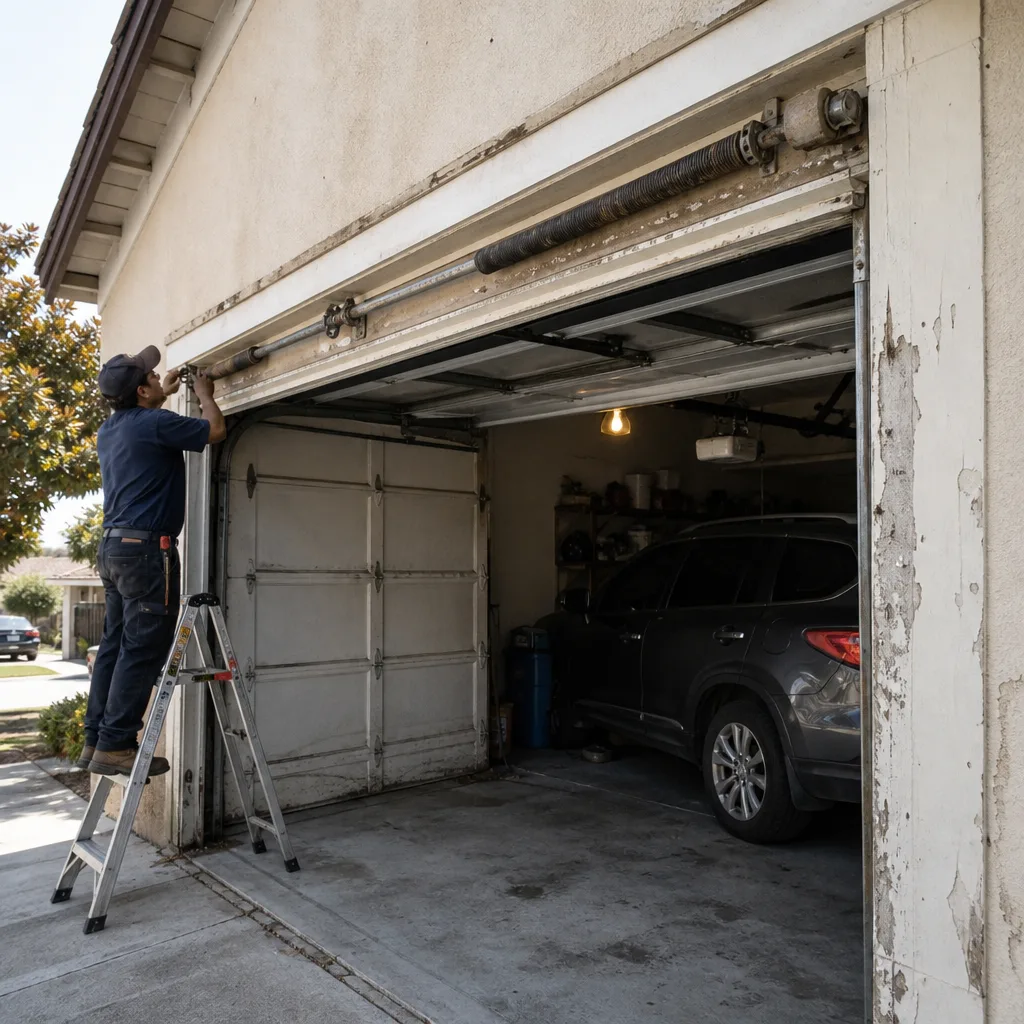 Before
 After
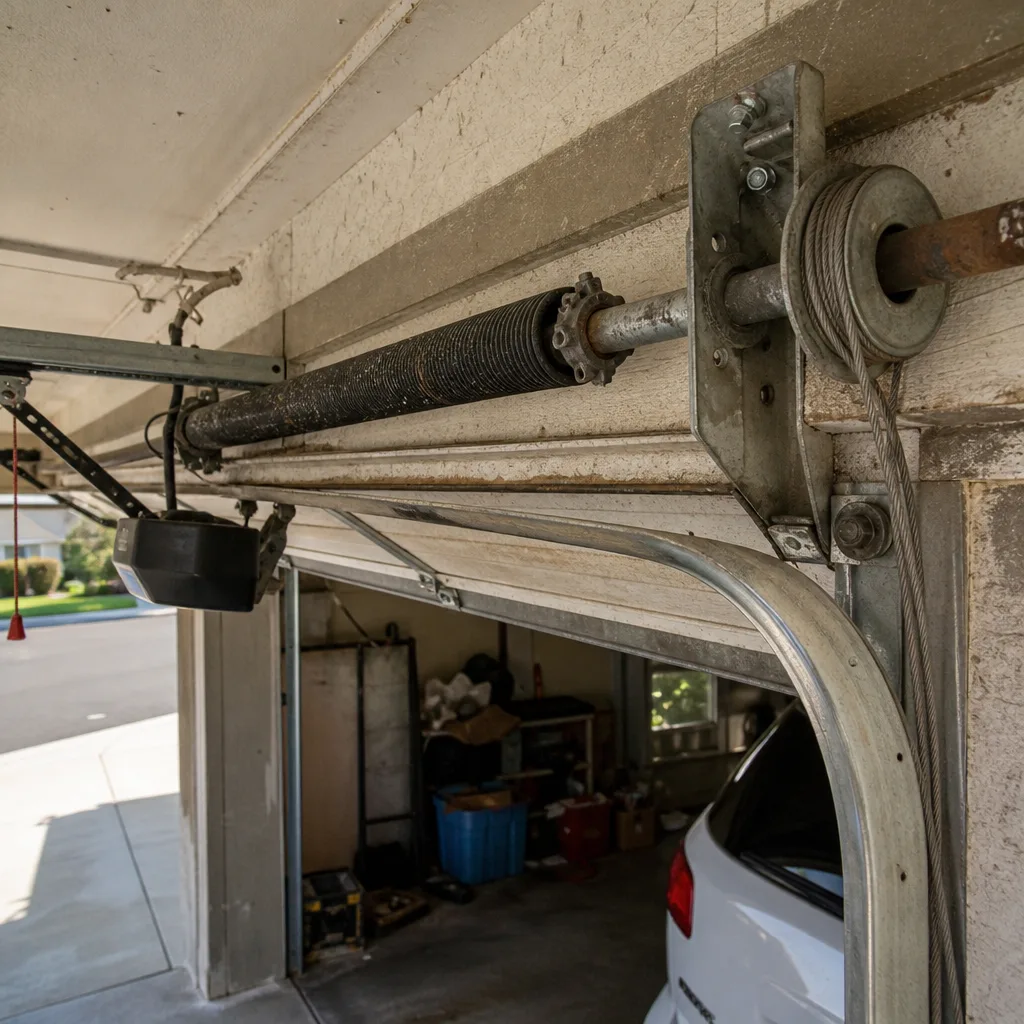 Before
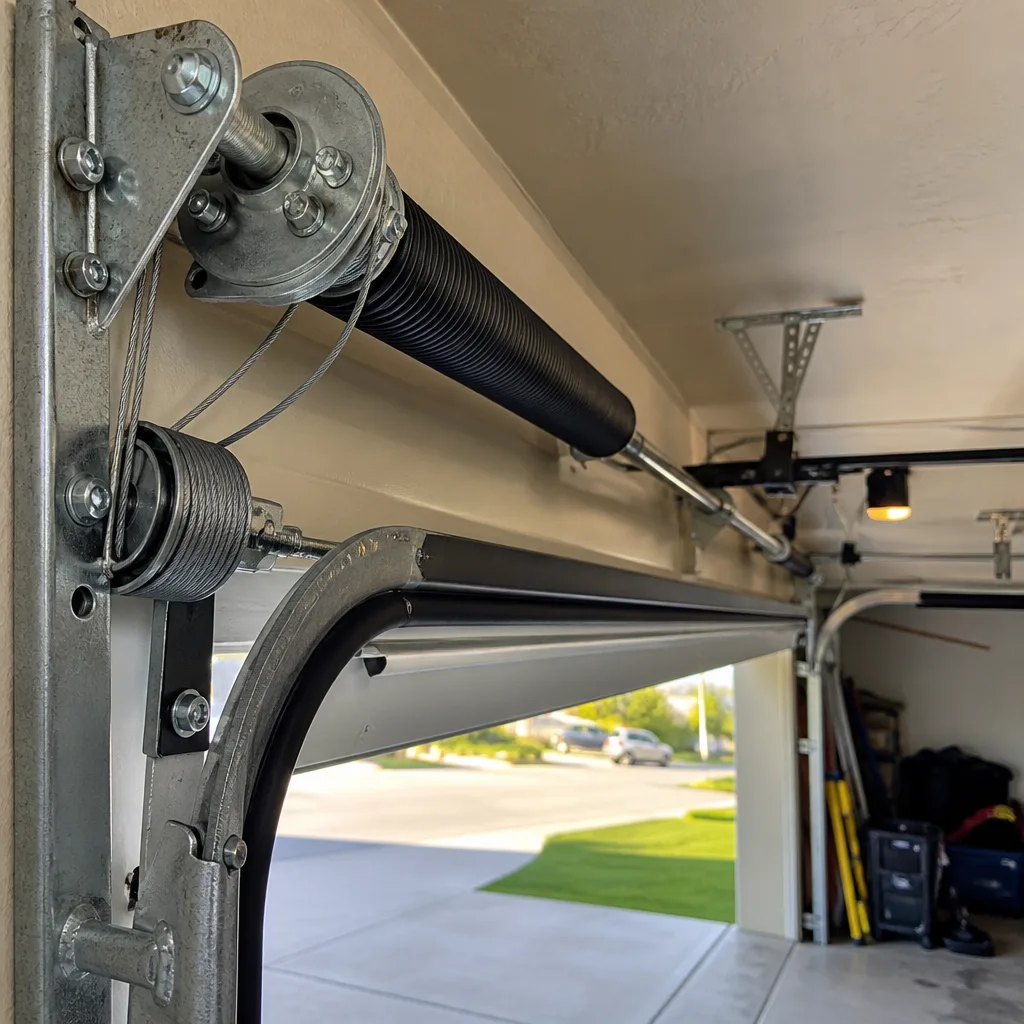 After
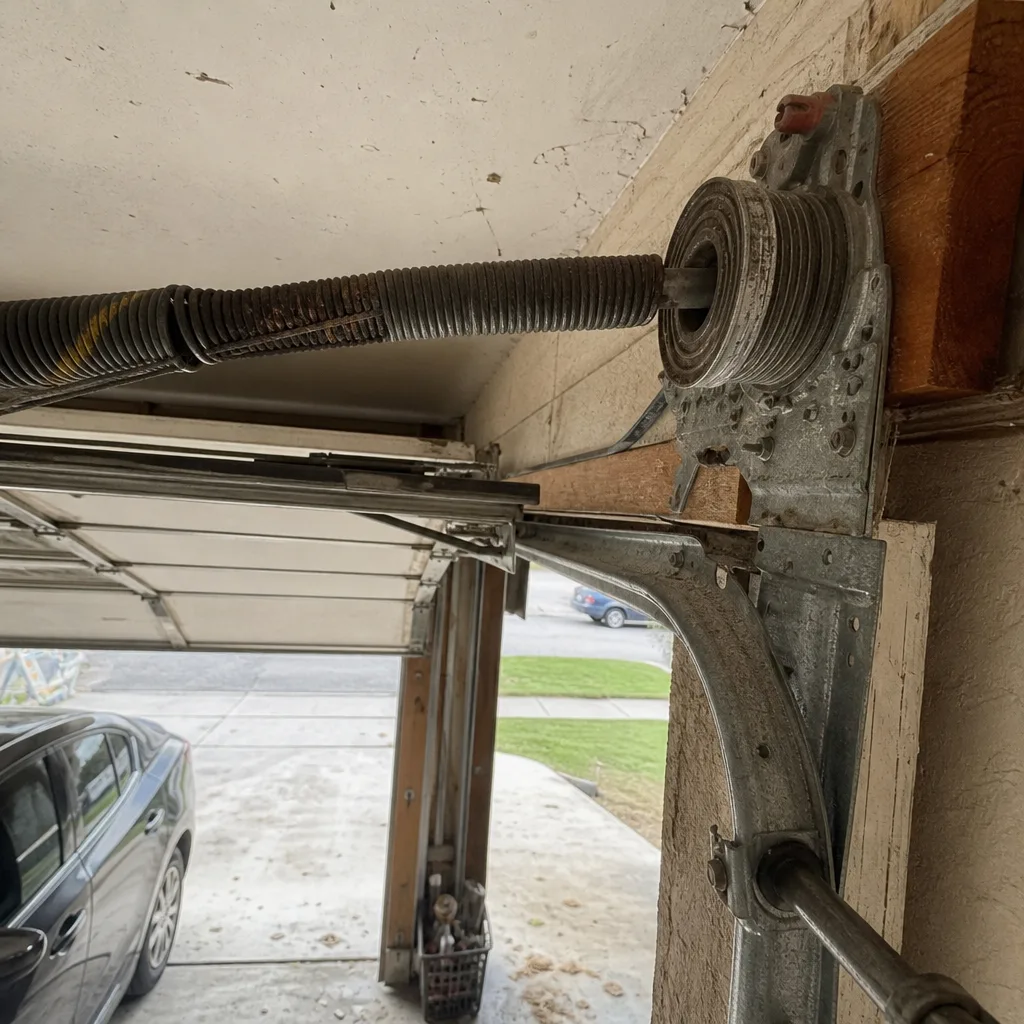 Before
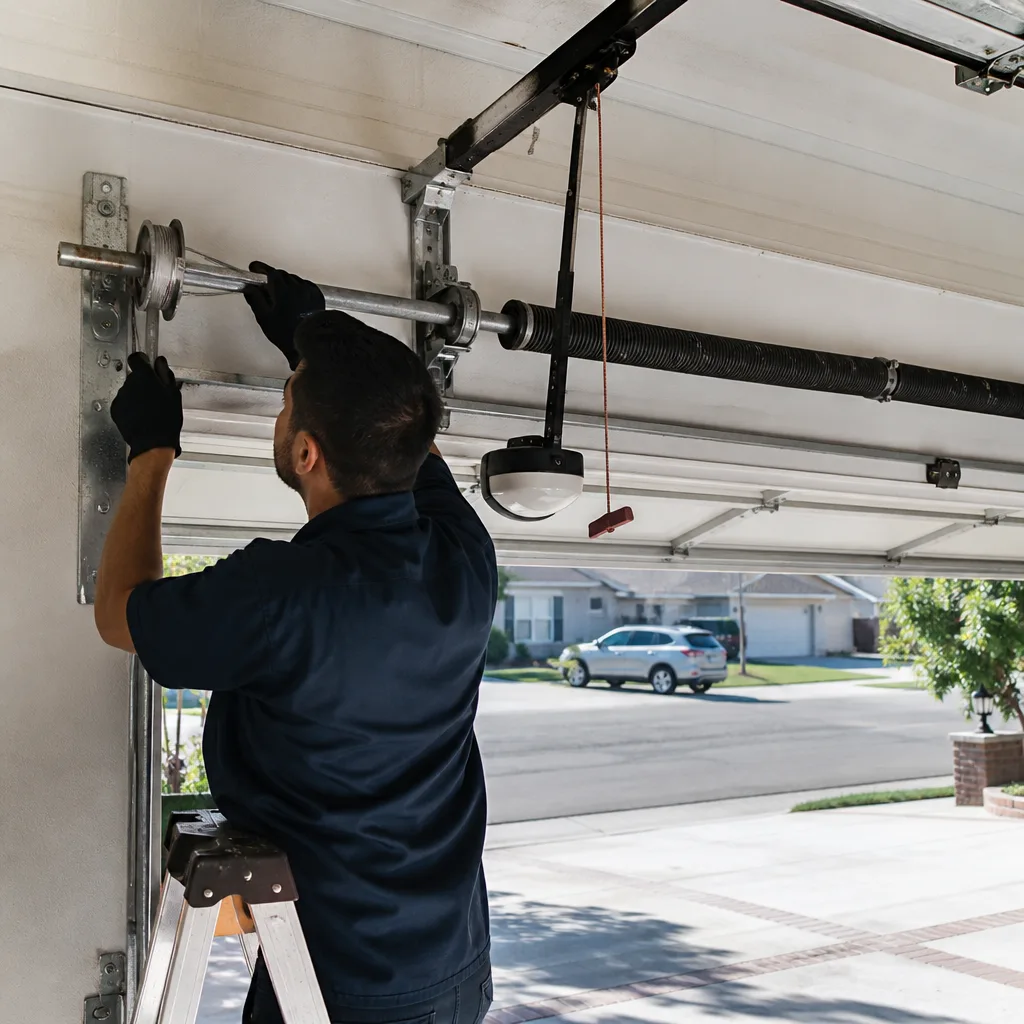 After