

Last updated October 31, 2026
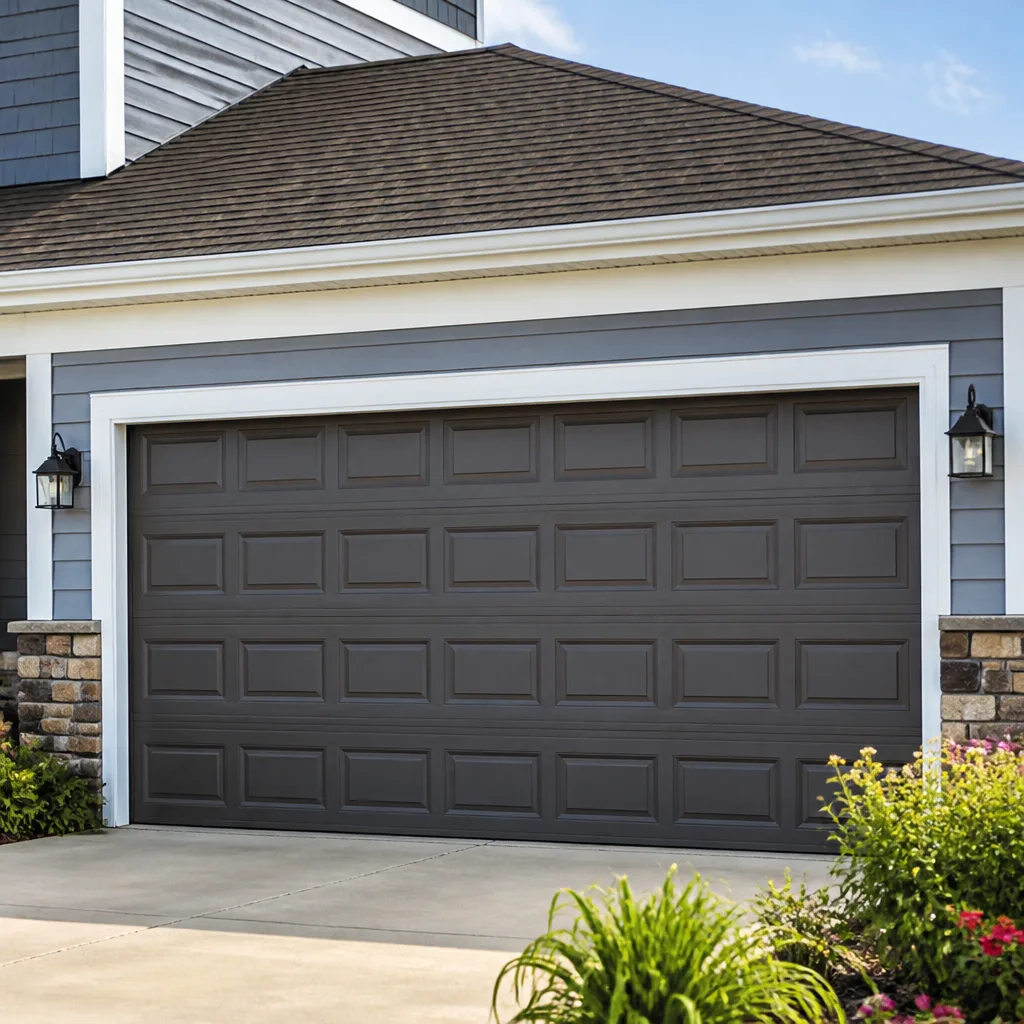 Raised-panel steel
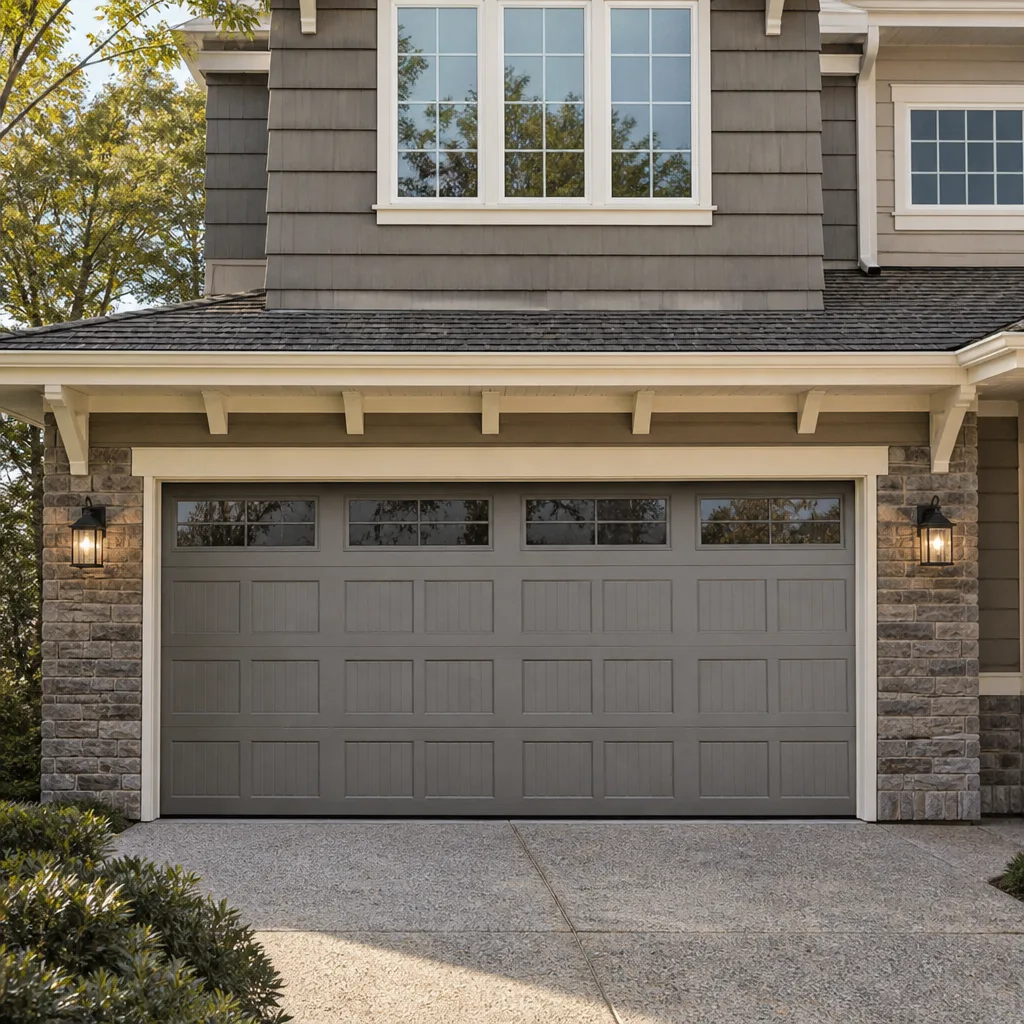
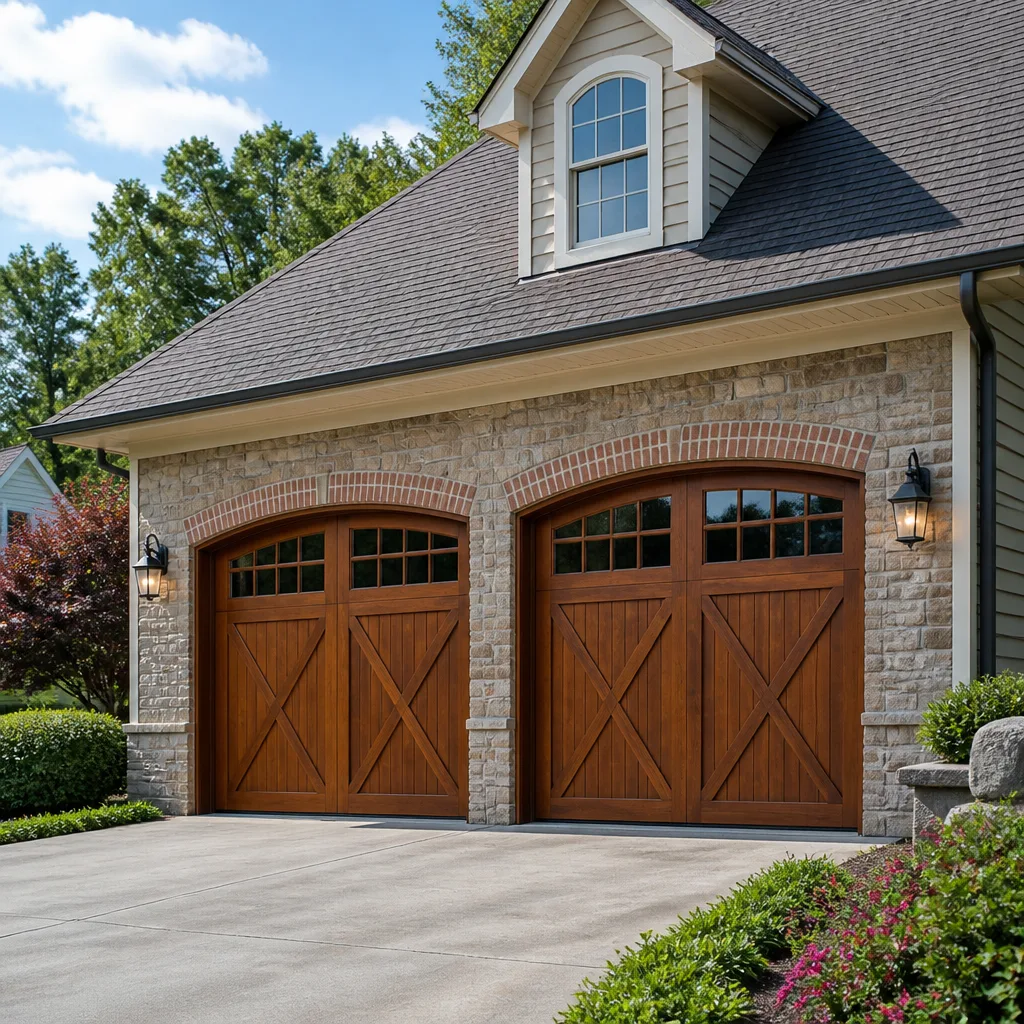 Carriage house
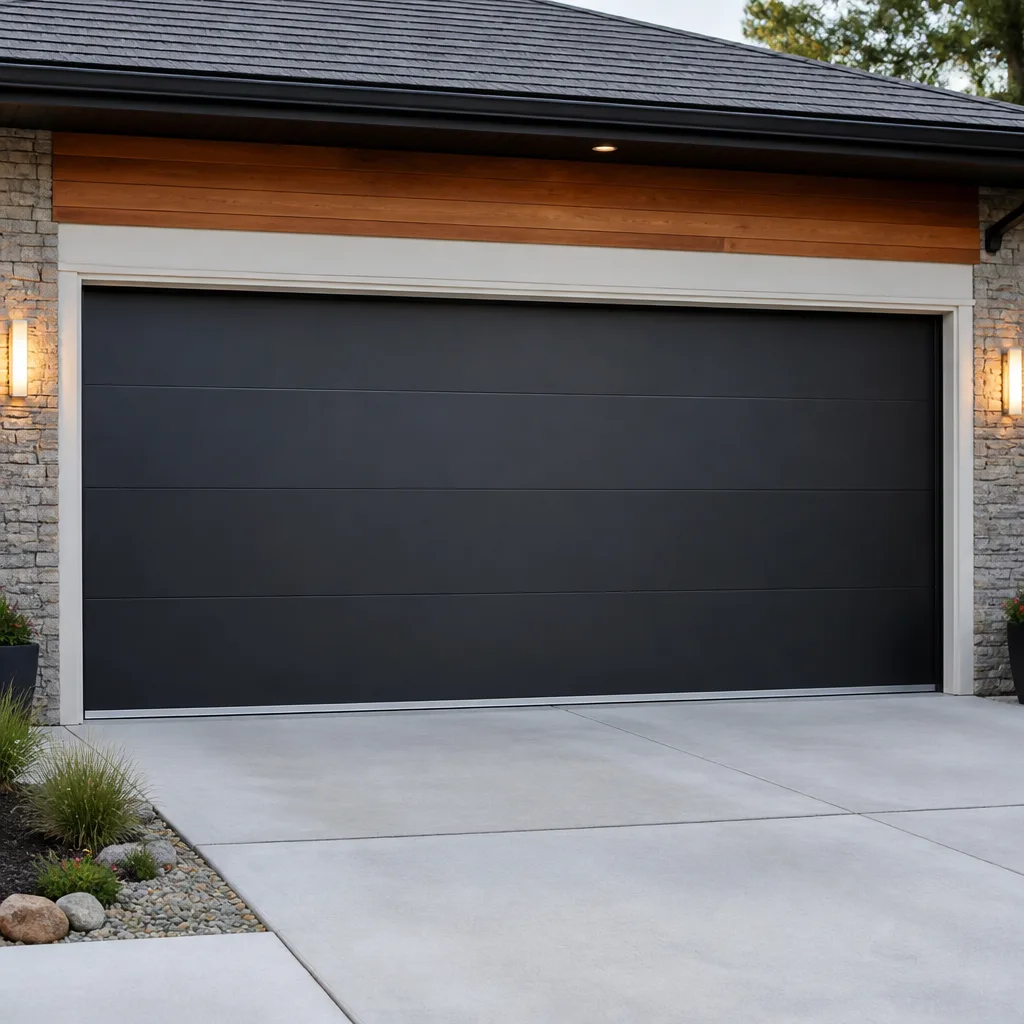 Modern flush
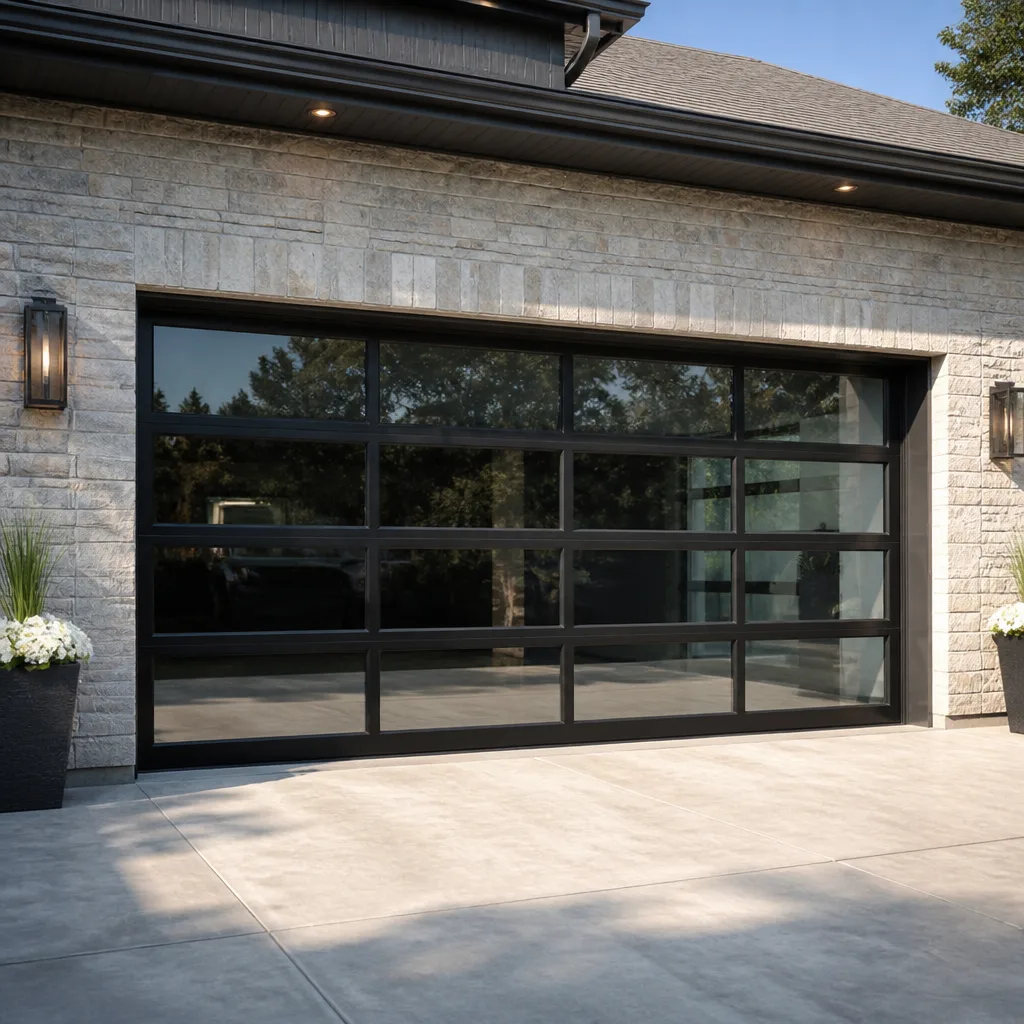 Full-view glass
 LiftMaster openers
 Chamberlain openers
Full 25-point door and opener safety check with every visit - springs, cables, rollers, tracks, and your LiftMaster or Chamberlain opener included
You get a price before we start. It does not change when the truck arrives.
Get your free estimateThe Complete Guide to Garage Door in Rancho Cucamonga
Most Rancho Cucamonga homes were built between 1985 and 2005. Do the math on that. The torsion spring mounted above your garage door has a service life of roughly 10,000 cycles, which for a door opened four times daily works out to just under seven years. Your door’s cables, rollers, and opener were installed the same week. All of them are now past their design life, and they’re failing in sequence. This guide maps the entire garage door as the seven-component system it actually is, explains which parts fail first under Inland Empire heat cycles, and gives you the framework to decide whether you’re repairing or replacing. If you own a home in Rancho Cucamonga, this page will save you money.
Quick Answer
A garage door is not one machine. It’s a system of seven interdependent components: springs, cables, tracks, rollers, panels, the opener, and weatherseal. In Rancho Cucamonga, the springs, cables, and opener fail first because of heat-driven metal fatigue and dust accumulation. Recognizing which component is failing, and whether your door is at a repair-or-replace inflection point, is how you avoid paying for a patch job that lasts six months. For complete Garage Door Repair in Rancho Cucamonga, you need a specialist who works on your specific door brand every week.
Styles & brands we work with
Table of Contents
- The Seven-Component Garage Door System
- Why Rancho Cucamonga Doors Fail: Climate and Construction Patterns
- Dominant Door Styles in Rancho Cucamonga Tract Homes
- HOA Restrictions in Terra Vista, Victoria, and Other Master-Planned Communities
- Openers Common in Rancho Cucamonga: LiftMaster, Chamberlain, and Upgrade Paths
- The Lifecycle Cost Framework: Repair or Replace?
- A Maintenance Schedule That Works in the Inland Empire
- Common Mistakes to Avoid
- When to Call a Professional
The Seven-Component Garage Door System
Here’s the truth: when most homeowners call about their garage door, they describe the door as broken. But doors rarely break as a unit. One component in the system fails, and the others strain to compensate until something else gives way. Understanding the seven parts helps you describe the problem accurately and avoid misdiagnosis by a technician who’s rushing the job.
Component 1: Torsion Springs
The torsion spring is the muscle of the system. It carries the door’s full weight, typically 150 to 300 pounds, through every cycle. Spring failure is sudden and loud – it sounds like a gunshot in the garage. Once the spring breaks, the opener motor will burn itself out trying to lift a door it was never designed to deadlift. In our experience, springs on doors facing west or south in Rancho Cucamonga fail noticeably earlier because ambient garage heat accelerates metal fatigue.
Component 2: Cables
The cables run along both sides of the door, connecting the bottom brackets to the spring system. When a cable frays or snaps, the door goes up crooked or not at all. Cable failure often follows spring failure, since a broken spring transfers sudden unbalanced load to the cables. Never attempt cable replacement yourself. The tension in these cables can sever fingers. A trained garage door repair specialist in Rancho Cucamonga will always replace cables in pairs, because one fresh cable next to a fatigued one creates an imbalance that tears up the track.
Component 3: Tracks
Tracks are the steel channels that guide the rollers. Most track problems are alignment issues caused by loose bolts, a settling garage slab, or an impact from a car bumper. You’ll hear grinding and the door may jerk mid-travel. Track replacement is rare; realignment is common. But if the tracks are original to a 30-year-old home, they may be rusted thin at the bottom curve, which is where they eventually split.
Component 4: Rollers
Rollers are the wheels that ride inside the tracks. Steel rollers last five to seven years before the bearings grind down. Nylon rollers are quieter and last longer – we recommend them on every door that’s worth keeping. If you hear a rumble that worsens with each cycle, the rollers are likely done. Left too long, a seized roller can bind in the track and twist the door sideways enough to unseat it.
Component 5: Panels
Panels are the visible face of the door. They dent, they rust at the bottom edge from sprinkler splash, and they sag when the internal insulation breaks down. Panel damage is cosmetic unless the bottom panel is rusted through at the hinge points. One rusted panel doesn’t mean you need a new door, but if the panel is part of a discontinued design, matching it may mean ordering from a door manufacturer such as Clopay or Amarr with a lead time measured in weeks.
Component 6: The Opener
The opener is the motor that does the lifting – but only when the spring is doing its job. A healthy spring system lets the opener work easily. A worn spring makes the opener work against the full door weight, which burns out the motor and strips the internal gear. For garage door opener repair in Rancho Cucamonga, the first check is always spring balance. Openers themselves fail in three main ways: gear wear, circuit board failure, or sensor misalignment.
Component 7: Weatherseal
The weatherseal is the rubber strip along the bottom of the door and the vinyl trim around the frame. It’s the least expensive component and the most ignored. In Rancho Cucamonga, a cracked bottom seal admits dust, leaves, and roaches directly into the garage. It also lets summer heat in, which pushes your garage temperature over 100 degrees and makes everything stored in there age faster.
Why Rancho Cucamonga Doors Fail: Climate and Construction Patterns
Rancho Cucamonga sits in a hot-summer Mediterranean climate. That’s a polite way of saying the garage becomes an oven from June through September. Uninsulated garage doors in the 91730 and 91737 ZIP codes regularly hit 110 to 120 degrees internally during heat waves. That heat does three things to a garage door system.
First, metal springs lose temper slightly with each heat cycle. The steel expands and contracts daily, and over a decade that micro-fatigue adds up to a spring that fails at cycle 7,500 instead of 10,000. Second, nylon and rubber parts dry out. Roller bearings, weatherseal, and the rubber grommets isolating the opener motor all harden and crack. Third, dust from the Santa Ana winds works into every moving joint, turning lubricant into a grinding paste. We see this pattern constantly: a door that ran quietly for years begins grinding every August because the grease has picked up enough Inland Empire dust to act like sandpaper.
The construction pattern matters too. Most Rancho Cucamonga tract homes were built in boom years: 1985-1990, 1995-2000, and 2003-2006. Builders installed the least expensive functional door that met code – usually a raised-panel steel door with a contractor-grade opener. Those doors loaded onto hundreds of homes in the same phase of a subdivision all hit their failure wall at roughly the same time. If your neighbors on a street in Victoria are getting spring replacements, yours is likely within 18 months of the same repair.
Dominant Door Styles in Rancho Cucamonga Tract Homes
If you drive through Etiwanda, Alta Loma, or central Rancho and note the garage doors, you’ll see two dominant styles. The first is the raised-panel steel door, the same stamped-steel design installed on millions of California tract homes. The second is the carriage-house overlay, which looks like old wooden barn doors but is actually stamped steel with a faux-wood grain finish.
Raised-panel steel doors are simple, inexpensive, and durable. Their weakness is denting – a stray bicycle, a basketball, or a backing car leaves a visible crease that can’t be uncreased. When a single raised panel is dented, replacement options depend on the manufacturer. Some brands, including Wayne Dalton and Amarr, sell individual panels for recent models. On older doors, the panel profile may be discontinued, forcing a full replacement.
Carriage-house doors hold resale value better in Rancho Cucamonga. Buyers in master-planned communities respond to that curb-appeal upgrade. A carriage-house door from Clopay or Amarr typically runs 30 to 50 percent more than an equivalent raised-panel door. It also requires different hardware: decorative hinges, handle sets, and often a longer installation time because the overlay panels are heavier. For a full garage door installation in Rancho Cucamonga, the style choice drives both the price and the lead time.
The third style, which you’ll see less often but which appears on custom homes in the Vineyard Avenue corridor and up toward Hermosa, is full-view aluminum with frosted glass panels. Those doors are stunning, but they make sense only for homeowners who park in the driveway – a glass garage door turning a bedroom-to-garage conversion into a fishbowl is a mistake you’ll regret.
HOA Restrictions in Terra Vista, Victoria, and Other Master-Planned Communities
If you live in Terra Vista, Victoria, Rancho Etiwanda Estates, or any of the HOA-governed communities that dominate Rancho Cucamonga, you cannot simply buy any garage door you like. The HOA architectural committee controls color, style, and sometimes manufacturer. This is not a suggestion. It’s a recorded covenant, and violating it can trigger fines and a forced replacement at your expense.
Here’s how it works in practice:
- Pull your HOA’s architectural guidelines. They’re usually in the CCR bundle or on the management company’s portal. The key sections are Exterior Alterations and Garage Doors. Look for words like “raised panel,” “carriage house,” “earth tone,” or “white.”
- Identify the approved color palette. Most Rancho Cucamonga HOAs restrict garage doors to white, almond, sandstone, bronze, or a matching tone to the home’s fascia. The HOA will require a paint color code if your door is painted on site.
- Check the style requirement. If your neighborhood was built with raised-panel doors, the HOA may require you to stay with raised panels – or they may allow carriage-house upgrades as long as the design matches surrounding homes.
- Submit the modification request with manufacturer documentation. HOAs want a cut sheet showing the door model, material, and color. A reputable dealer will provide this as part of the quote.
In our experience, the mistake homeowners make is ordering a door they love and then discovering the HOA won’t approve it. The correct sequence is: HOA approval first, door order second. Most Rancho Cucamonga HOAs turn modification requests around in two to four weeks. Plan for that lag so you’re not waiting with a broken door through the summer.
Openers Common in Rancho Cucamonga: LiftMaster, Chamberlain, and Upgrade Paths
Walk into any Rancho Cucamonga home built after 1995 and the overhead opener is almost certainly a LiftMaster or a Chamberlain. Those two brands, both from the same manufacturer, dominate the builder-installed market. You’ll also find Craftsman openers on homes built in the 1980s and early 1990s, plus a scattered few Genie units on custom homes.
LiftMaster and Chamberlain share engineering DNA. The key difference is that Chamberlain openers include built-in myQ Wi-Fi connectivity on most models made after 2017, while LiftMaster often requires an add-on myQ hub. If you have a Chamberlain with myQ, you can check and operate the door from your phone. If your LiftMaster is older, the upgrade path is a myQ hub that plugs into the opener’s existing antenna signal. Either way, you’re looking at a $30 to $70 part, not a full opener replacement.
Here’s the practical upgrade decision tree:
- Opener is under five years old and the door moves normally: Keep it. Replace the battery in the wall console and reprogram remotes if needed.
- Opener is five to ten years old and the motor is noisy or straining: Have the gear and drive sprocket inspected. On LiftMaster and Chamberlain belt-drive units, a worn gear kit is a cheap fix versus a $250-to-$450 replacement.
- Opener is ten-plus years old or the circuit board is dead: Replace it. Modern openers include camera integration, battery backup, and much quieter operation. We install LiftMaster, Chamberlain, and Genie openers, and we’re already familiar with the wiring and mounting pattern from your existing unit.
- Craftsman opener from the 1990s: It’s served its time. The internal plastic gears are known failure points, and parts are increasingly hard to source. Budget for a modern replacement.
One more Rancho Cucamonga-specific note: if your house sits where the Santa Anas funnel through the foothills, your opener’s sensor alignment will drift. Wind vibrates the garage door tracks, and the photo-eye safety sensors at the bottom corners come out of line. If your door reverses for no reason, check that first.
The Lifecycle Cost Framework: Repair or Replace?
Most homeowners make the repair-versus-replace call emotionally. The door is broken, they’re late for work, and they just want it fixed. Here’s the framework we use with our customers in Rancho Cucamonga. It takes the emotion out of the decision.
Step 1: Total the projected repairs over the next three years. A spring replacement runs $180 to $340 on a standard residential door in this market. Cable replacement with labor is typically $150 to $250. A new opener is $250 to $650 installed, depending on model. Rollers are $90 to $150. If your door needs a spring now, cables within a year, and an opener soon after, you’re at $600 to $1,000 in repairs on a door that’s already 15 to 25 years old.
Step 2: Compare against the installed price of a new door. A basic raised-panel steel door installed in Rancho Cucamonga runs roughly $900 to $1,500. A mid-range carriage-house door with insulation goes for $1,800 to $3,200. A full-view aluminum door runs $3,500 and up. These are installed prices with the old door hauled away.
Step 3: Factor in what you get with the new door. A new door brings a new spring system with a fresh 10,000-cycle service life, new cables, new rollers, and a new weatherseal. That’s six of seven components reset to day one. The insulation upgrade alone makes a measurable difference in a Rancho Cucamonga garage used as a workshop or home gym.
The inflection point is usually this: if your projected repairs over three years exceed half the cost of a new door, and the door is more than 15 years old, replacement is the financially rational call. If the door is under 10 years old and has one failed component, repair it.
A Maintenance Schedule That Works in the Inland Empire
Garage doors in Rancho Cucamonga need more maintenance than doors in coastal climates. The heat, dust, and wind accelerate wear on every moving component. Here’s the schedule we recommend:
- Every three months: Inspect the weatherseal along the bottom of the door. In summer, it bakes. In winter, it contracts. A cracked seal is cheap to replace and protects everything stored in the garage.
- Every six months: Clean the photo-eye sensors with a dry cloth. The dust from the Santa Ana winds coats the lenses, and dirty sensors are the number one cause of a door that reverses without reason.
- Every year: Lubricate the rollers, hinges, and the spring with a garage-door-specific spray lubricant. Do not use WD-40. It strips existing lubricant. Use a lithium-based garage door spray on the rollers and hinges, and a silicone spray on the torsion spring.
- Every two years: Have the spring tension and cable condition checked. In our experience, this is the single highest-value maintenance visit. A technician catches a spring that’s lost tension and a cable that’s begun to fray before either fails catastrophically.
- After any major wind event: Run the door up and down twice while watching and listening. If the door shudders or the opener sounds labored, check the track bolts and sensor alignment.
If you want a more complete picture, read our garage door repair guide for Rancho Cucamonga, where we walk through failure symptoms in detail.
Common Mistakes to Avoid
- Replacing the opener before checking the spring. When a spring breaks, the opener strains under the full door weight. Many homeowners replace a “burned out” opener only to burn out the new one within months. The spring was the culprit. Always check spring condition first.
- Ignoring the HOA until the new door is ordered. In Rancho Cucamonga communities like Terra Vista and Victoria, an unapproved door style or color trigger fines and a forced re-do. HOA approval comes first.
- Using WD-40 on the spring and rollers. WD-40 is a solvent. It removes the grease that keeps your door quiet. Use a garage-door-specific lithium or silicone lubricant instead.
- Replacing only one spring. Torsion springs are installed in pairs on most residential doors. If one breaks, the other is at the same fatigue level. Replacing only the broken one saves money today and buys you a second failure within a year, plus a service call fee to cover it.
- Letting a noisy roller go. A grinding roller is a seized bearing. A seized roller can bind in the track, twist the door, and pull the cable off the drum. That’s a $150 fix that becomes a $400 repair.
- Buying the cheapest door available. On a Rancho Cucamonga home that will be sold eventually, a cheap non-insulated door reads as builder-grade to buyers. A modest step up to an insulated door with better panel construction pays back at resale.
When to Call a Professional
Cables and springs are dangerous. The torsion spring is under hundreds of pounds of torque. A spring that releases unexpectedly can break bones and cause life-threatening injuries. The cables carry the same tension. If your spring has snapped, if a cable is frayed, or if the door hangs crooked on one side, do not attempt a DIY fix. We’ve repaired doors where a homeowner tried to reset a spring and ended up with a bent track, a shattered roller, and a door jammed in the half-open position. Call a specialist.
You should also call when the door consistently fails to stay balanced, when the opener runs but the door doesn’t move, or when any component makes a sound you’ve never heard before. Bronze Garage Door Repair offers free estimates in Rancho Cucamonga – call (833) 734-6940 and we’ll diagnose the problem on the phone before we ever roll a truck. Garage doors are all we do.
See the difference
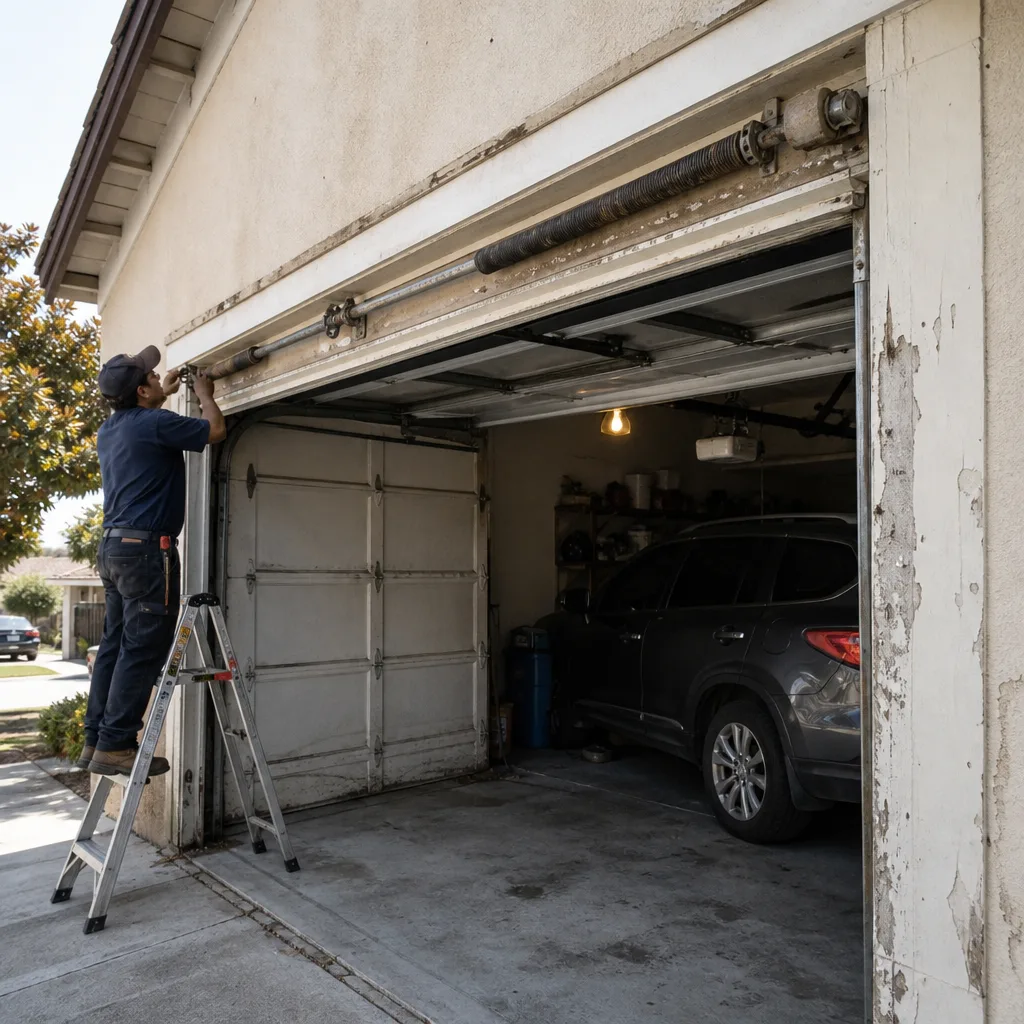 Before
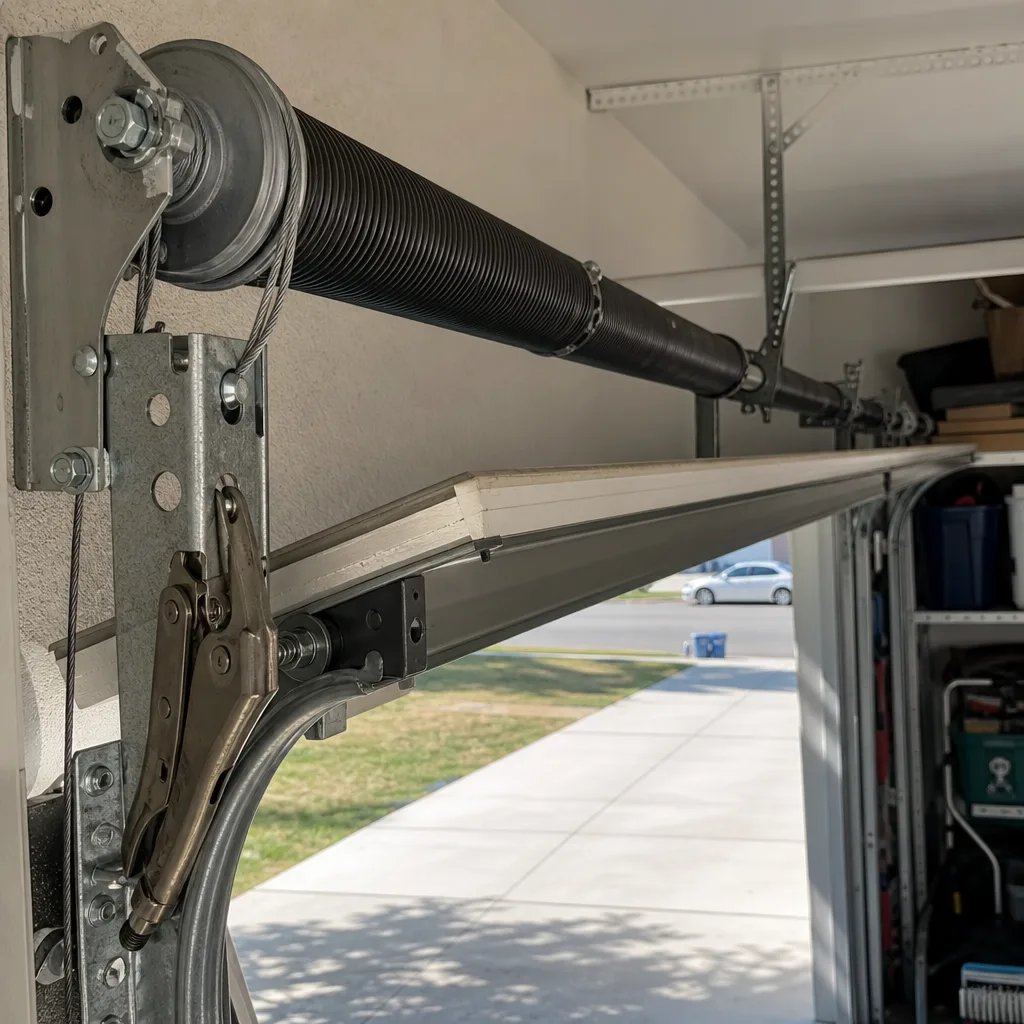 After
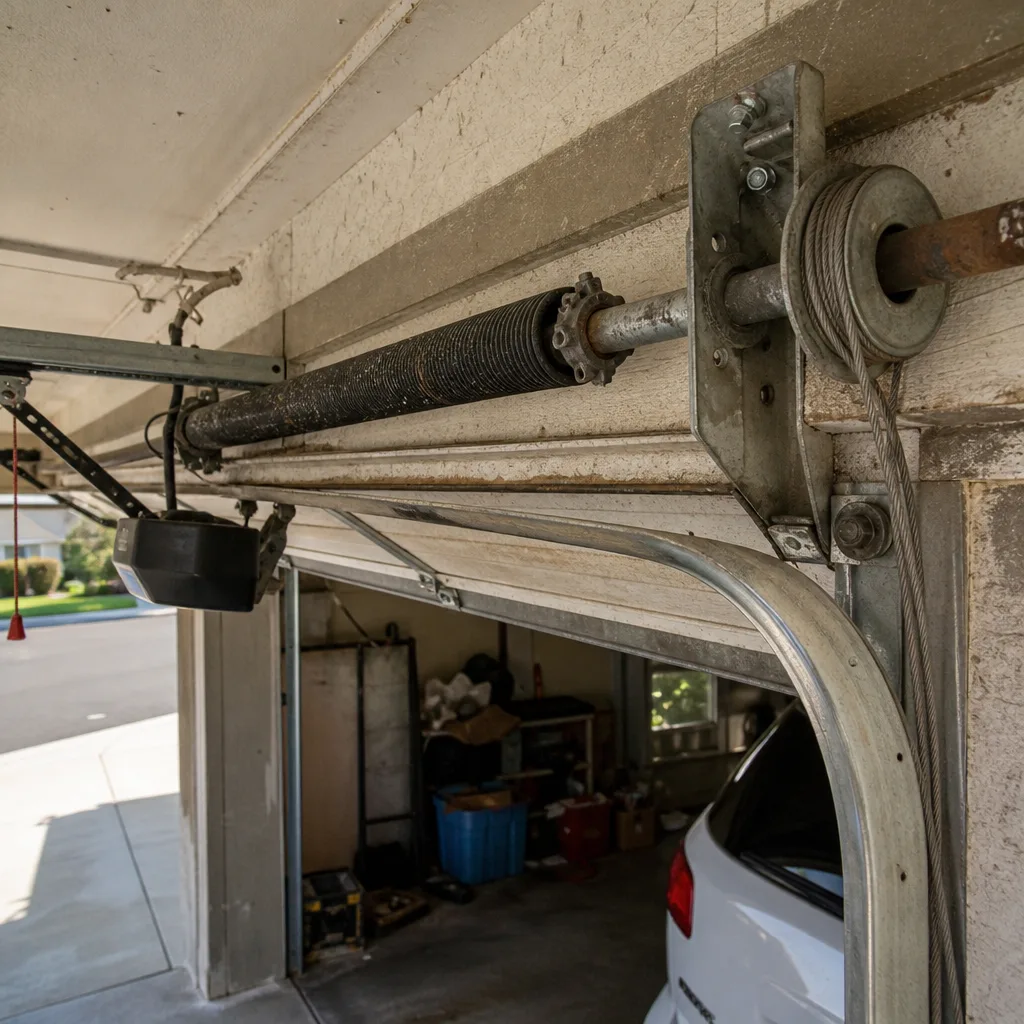 Before
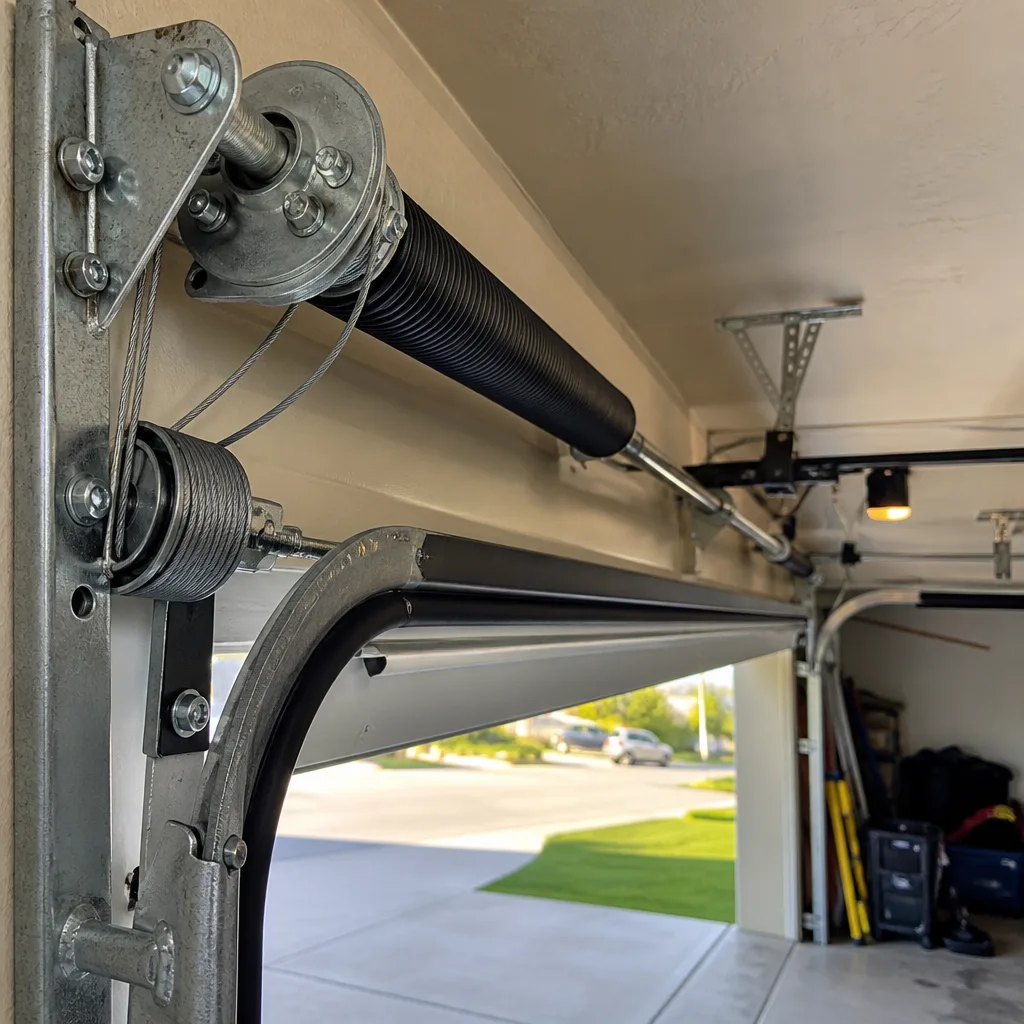 After
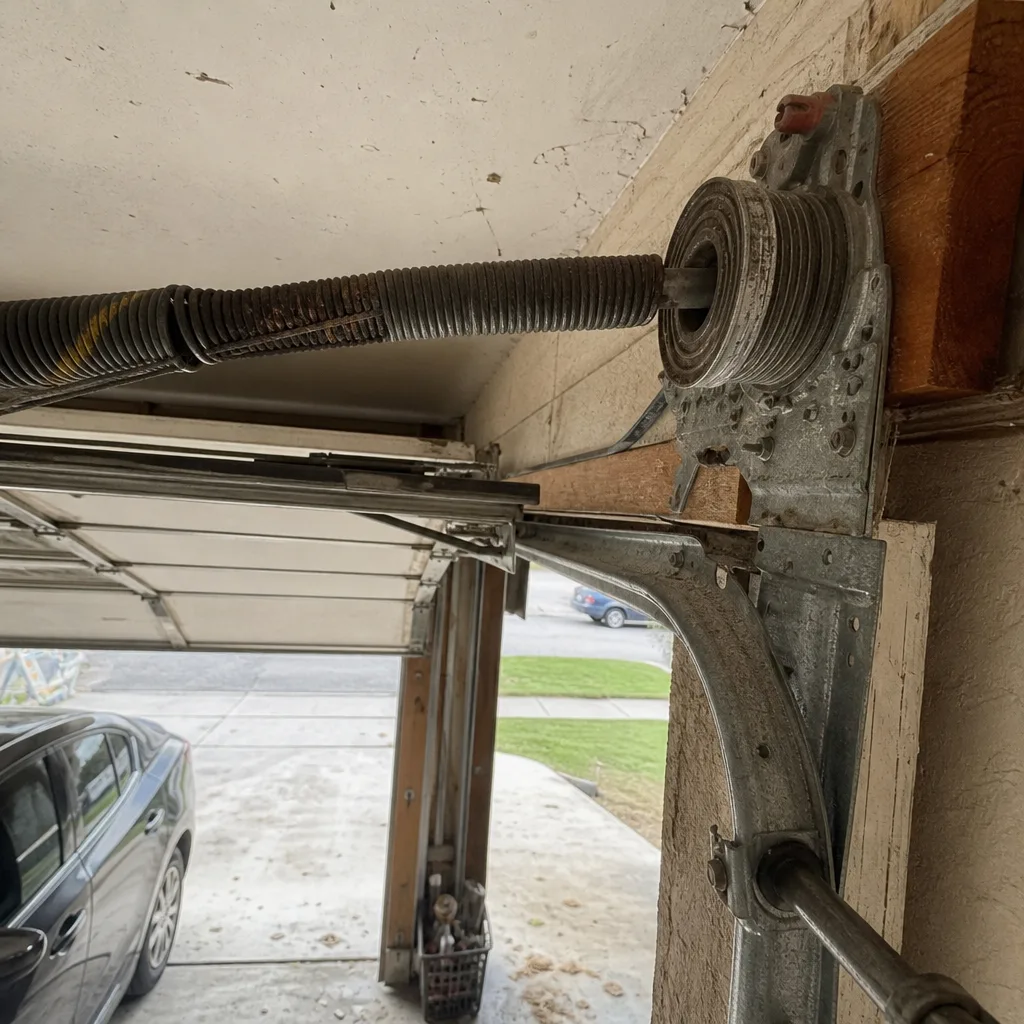 Before
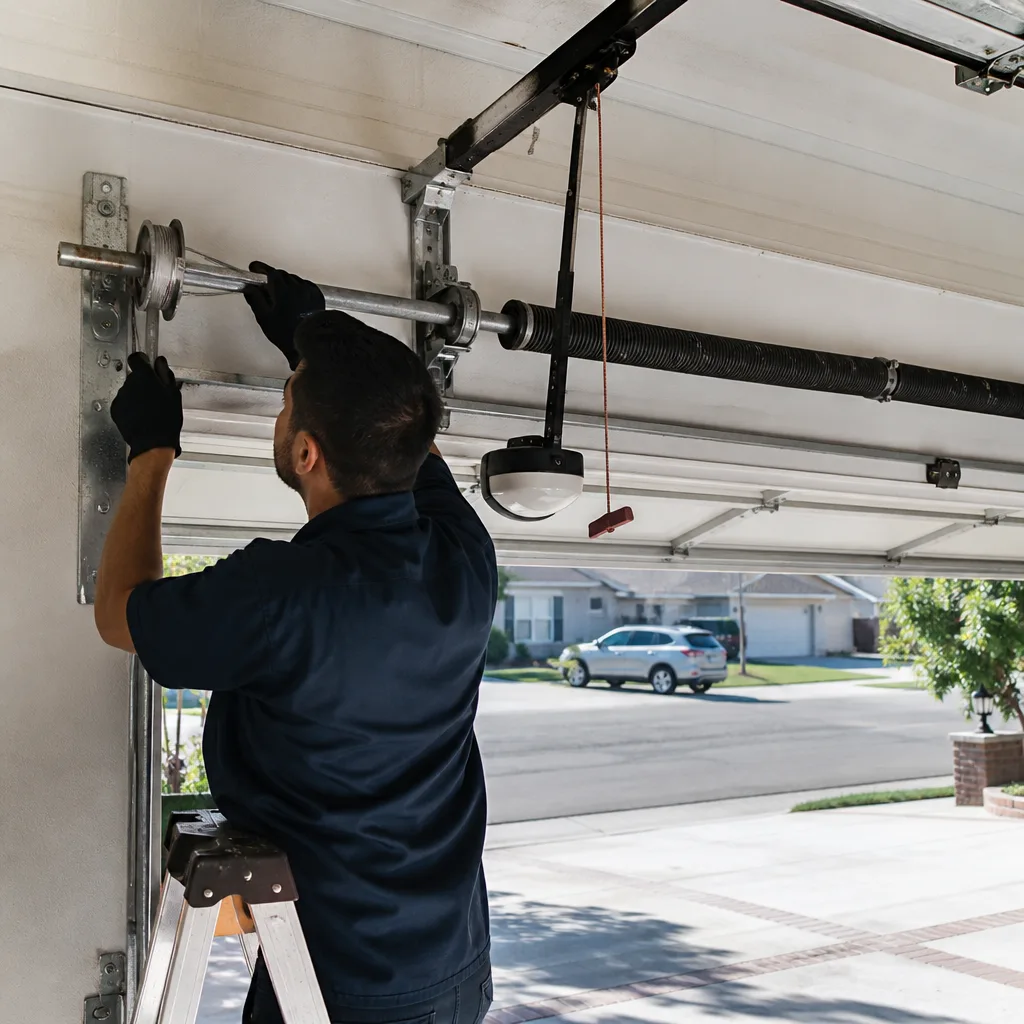 After
Frequently Asked Questions
Spring replacement on a standard residential door in Rancho Cucamonga typically runs $180 to $340, including the part and labor. Heavy doors with two large springs run higher. The price is quoted and agreed before any work starts. Call (833) 734-6940 for a firm quote on your specific door.
In most cases, yes. We keep the high-failure parts – springs, cables, rollers, and gears for LiftMaster and Chamberlain openers – stocked on the service truck. A typical spring or cable replacement is done in one visit. Some panel and full-door orders require a measure and lead time, but those are planned replacements, not emergency repairs.
If your home is in an HOA-governed community such as Terra Vista, Victoria, or Rancho Etiwanda Estates, yes – you need architectural committee approval before the door is installed. We’ll give you the manufacturer documentation your HOA requires so the approval moves as fast as possible.
No. We quote a fixed price before any work starts, and that price stands. The only exception is if the door has hidden structural damage that’s impossible to see on arrival – for example, a cracked panel hidden behind weatherstripping. In that case we stop, show you the issue, and re-quote before touching anything.
We work on LiftMaster, Chamberlain, Genie, and Craftsman systems specifically, plus mechanical door hardware from Clopay, Amarr, Wayne Dalton, and Raynor. If your opener is a builder-installed unit from a Rancho Cucamonga tract home, odds are high we already know the model and its failure modes before we arrive.
A basic raised-panel steel door installed in Rancho Cucamonga typically runs $900 to $1,500. A mid-range insulated carriage-house door runs $1,800 to $3,200. Full-view aluminum doors start around $3,500. Every installation includes a new spring system, cables, and weatherseal as part of the install. Call (833) 734-6940 for a free measure and written estimate.
The Bottom Line
A garage door is a seven-component system with predictable failure windows, and Rancho Cucamonga’s climate accelerates every one of those windows. The springs will fail. The cables will fray. The opener will eventually die – usually because the spring died first and nobody caught it. Smart homeowners treat the system like a system: maintain it on schedule, get a spring check every two years, pull HOA approval before ordering a new door, and make the repair-or-replace call with real numbers rather than stress. One call covers the full door – springs, tracks, opener, and all. That’s the whole job, and that’s how we do it at Bronze Garage Door Repair.
Written by the team at Bronze Garage Door Repair, serving Rancho Cucamonga since 2014.